Same Building Blocks, Different Outfits: Understanding Nigerian Creative Style.


When conversations around uniqueness come up, Nigerian creatives often take center stage. There’s a visible commitment to standing out, dressing differently, expressing identity through clothing, and building personal style as part of creative identity.
However, the closer you look, the more these “unique” expressions begin to look… familiar.
What you notice is a pattern: different individuals, drawn to alternative styles, arriving at overlapping visual outcomes. It raises the question of why Nigerian creatives dress alike, even within spaces that prioritize individuality.
The Building Blocks of Creative Style
Within Nigerian creative spaces, especially among younger creatives, certain style elements recur across individuals and subcultures. These include oversized silhouettes, layered fits, graphic tees, beanies, distressed fabrics, jorts, mesh tops, and statement accessories.
These pieces are not unique to one person or one group. They function more like building blocks — familiar components that can be combined, rearranged, and styled in multiple ways.
Across aesthetics such as streetwear, grunge, coquette, hippie-inspired looks, and archive-influenced styling, these same elements often reappear. While the outcomes may look different, the foundation remains shared.
This is where the idea of individuality becomes more nuanced. Distinction is not always found in entirely new components, but in how those components are assembled.

Shared references and the Pinterest effect
One of the most influential forces shaping these building blocks is the ecosystem of shared references.
Platforms like Pinterest, Instagram, and digital moodboards function as modern archives of taste. They allow creatives to collect, study, and revisit visual ideas that inform how they dress and present themselves.
Over time, what feels personal begins to echo what has already been widely circulated and admired. This is not necessarily imitation. It is the natural outcome of many people engaging with the same visual materials.
As a result, similarities begin to emerge not because individuals lack originality, but because they are drawing from overlapping pools of inspiration.
In that sense, resemblance becomes less about copying and more about shared exposure.
Nostalgia, Y2K, and recycled aesthetics
Nostalgia also plays a significant role in shaping contemporary creative style.
The resurgence of early 2000s aesthetics, often grouped under Y2K-inspired fashion, has reintroduced elements such as low-rise fits, cropped tops, layered accessories, visible undergarments, and expressive styling into modern wardrobes.
What we see today is not a direct replication of that era, but a reinterpretation of it. Each creative filters these references through personal taste, cultural context, and current trends.
The result is a set of looks that may feel familiar in origin, yet distinct in execution.
For men and women alike, elements that once carried specific cultural meanings have been recontextualized within creative spaces. Pieces that were once read as unconventional or subversive now function as expressions of identity, awareness, or alignment with a particular aesthetic.

From “Yahoo Boy Core” to Creative Streetwear
There is also a noticeable shift in how certain styles are perceived over time.
Elements that were once associated with labels like “yahoo boy core” — such as bold accessories, graphic prints, name brands, and sagging — are now widely adopted within creative streetwear culture.
The same visual components remain, but their meanings have evolved.
This shift illustrates how cultural interpretation changes with context. What was once viewed through a negative or suspicious lens can, over time, become normalized, rebranded, and absorbed into mainstream creative expression.
In this process, fashion becomes less about fixed meanings and more about fluid interpretation.

Cultural Influence and Individual Expression
Artists and creatives also play a role in shaping how these styles are understood and adopted.
Figures like Rema demonstrate how personal identity can influence the expression of style. His fashion choices often reflect a blend of global influences and cultural references, including elements tied to his Benin heritage.
As these expressions enter wider circulation, they are no longer confined to their original context. Instead, they are reinterpreted by others, adapted into new combinations, and integrated into different personal styles.
This cycle — of influence, reinterpretation, and reapplication — contributes to the broader visual language within the creative space.


The Pressure to Be Seen as Distinct
In a culture where visibility matters, style is not only about self-expression but also about perception.
Many creatives are conscious of how they appear online and in physical spaces. There is an awareness that personal style can influence how one is perceived, discovered, or remembered.
This creates a subtle pressure to stand out.
However, when many individuals are working from similar references, standing out is less about using entirely different elements and more about how those elements are combined and presented.
In this environment, originality often reveals itself through styling choices, layering, confidence, and consistency rather than entirely new visual components.
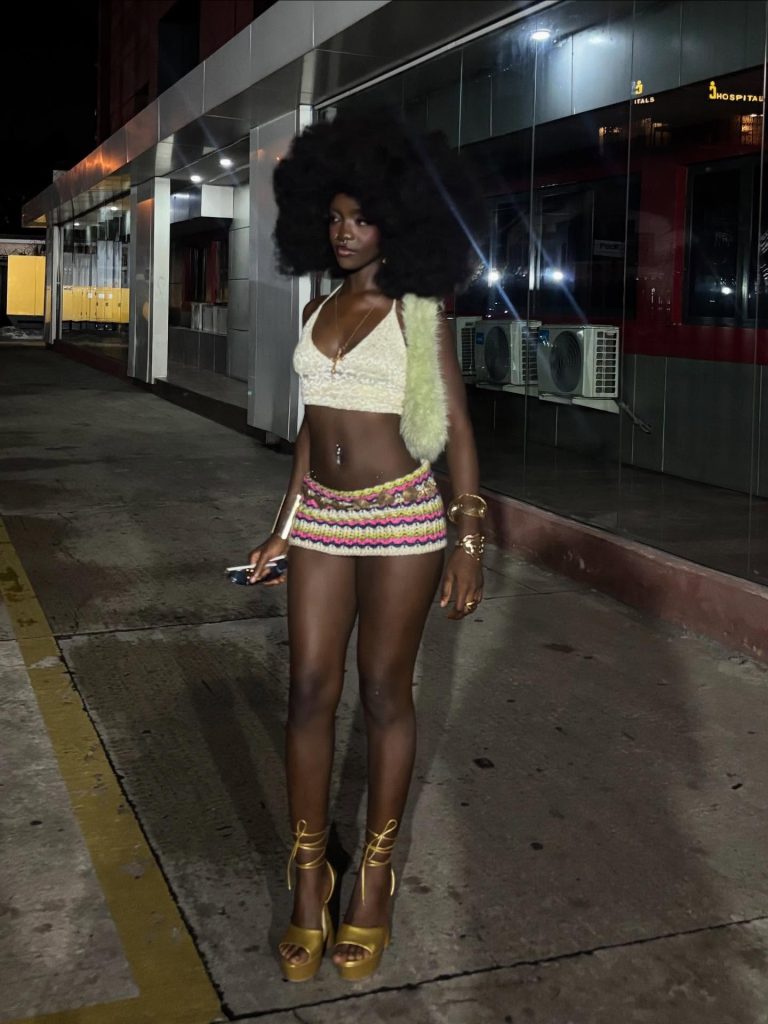
A shared visual language, not a lack of originality
Names like Mowalola Ogunlesi, Ashley Okoli, and platforms like Street Souk often surface in discussions around Nigerian creative fashion. Their work reflects distinct identities, yet they exist within the same broader ecosystem of influences that shapes taste and inspiration.
This is where the concept of a shared visual language becomes useful.
What is happening is not a lack of originality. It is the emergence of a system where many individuals are speaking the same visual “language,” but expressing themselves in different “dialects.”
Dressing, in this context, becomes a process of selecting from common elements and arranging them in ways that reflect personal identity. Similar pieces may appear across different people, but the intention, combination, and execution vary.

Perhaps what defines Nigerian creative style at this moment is not uniformity, but a shared foundation that allows for endless reinterpretation.