Asake, Bees & Honey, Shatta Wale, Tentik and More on New Music Friday


Every Friday arrives with its own kind of noise. Releases stacked on releases, timelines moving too fast to hold a feeling. But somewhere between the urgency and the overload, a pattern always reveals itself. This week leans into intention. Artists are positioning, testing new sounds, stretching familiar ones, and, in some cases, choosing restraint over spectacle. From records that fill the room instantly to those that settle in slowly, this is a release cycle shaped by mood, not just momentum. Asake and DJ Snake lock in spiritual Afrobeats muscle on “Worship”; Shatta Wale pulls John Legend into a reggae-soul victory lap with “Ain’t Nobody”; bees & honey smooth out the afterglow with FOLA on “When The Party’s Over”; Khaliberry charges forward with unapologetic “Big Energy”; and Tentik plants his flag deep in the rap soil with the raw, bar-heavy debut album TEN TOES.
Worship — Asake, DJ Snake

There’s a certain kind of expectation that follows Asake now – not just to make hits but to make moments that feel lived-in, spiritual, and communal. After months of teases from live performances at Red Bull Symphonic events and snippets floating around social media, at midnight, Asake initiated a surprise release of his collaboration, “Worship”, featuring DJ Snake. On “Worship”, that expectation meets a wider, more global ambition, pulling in DJ Snake for a record that stretches beyond the familiar contours of street-pop. The production helmed by Magicsticks and DJ Snake sits in that familiar space—log drum pulses, layered percussion, and some synth flourishes. It’s the kind of sonic blend that merges Afrobeats textures with electronic urgency, a space DJ Snake has long mastered, now reframed through Asake’s distinct cadence. It’s not a full-on DJ Snake festival banger; the drops are restrained, more like subtle builds that let Asake’s delivery stay front and centre.
Asake’s verses lean into his signature relaxed, almost conversational flow, heavy on the Yoruba/English mix, with themes of gratitude, staying close to God no matter the situation, self-belief, and letting things play out. Conveying the typical spiritual/street wisdom flair that permeates his music. The hook, which is now familiar to an Asake fan, remains catchy enough to stick and evoke similar feelings of gratitude that Asake pours into the track.
Asake leans on familiar motifs: faith, hustle, and the quiet insistence that his rise is neither accidental nor purely self-made. There’s a recurring spiritual undertone in his music, and here it feels amplified, almost ceremonial.
That duality is what gives the song its edge. On one hand, it’s deeply rooted in the street — the cadence, the language, and the emotional register all feel local, grounded. On the other hand, the production pushes it outward, positioning the track for global spaces where varying instruments like the violin, synths and percussion marry.
When The Party’s Over — Bees & Honey, Fola
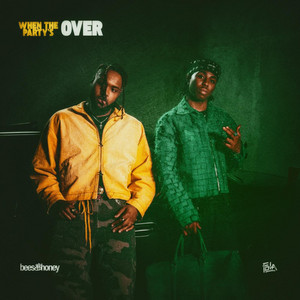
The track “When The Party’s Over” by Berlin/London-based multicultural production/DJ/songwriter group bees & honey, featuring FOLA, who’s been building on softer, expressive Afro-fusion cuts, is a mellow, laid-back record with a European electronic polish that leans into tempo and immediacy.
The production is sparse — soft keys, light percussion, and ambient textures that stretch the song into something almost weightless. It creates space, one Fola understands. His delivery is measured, almost careful, as though he’s tracing thoughts in real time and performing them accordingly as he glides on a smooth and atmospheric production of subtle Afrobeat rhythms blended with electronic/house-leaning elements typical of bees & honey’s sound. FOLA handles the lead vocals with his signature soft, melodic delivery—expressive but understated, mixing English with some pidgin/Yoruba touches. The lyrics revolve around that “after the party’s over” theme: questioning where people go when the lights come up and the good times end and relationships or connections are tested in the quiet aftermath. Lines like “let me know where you go when the party’s over” repeat in the hook, giving it a contemplative, almost introspective vibe—romantic uncertainty mixed with a touch of melancholy.
“When The Party’s Over” carries a minimalism that gives the track its emotional clarity. It’s sound turned into a feeling — soft, lingering, and deeply familiar, staying in one emotional pocket and a progression that makes the song all the more honest to a listener.
Ain’t Nobody — Shatta Wale, John Legend

Some collaborations announce themselves loudly. Others arrive with a quiet kind of confidence, built on contrast. “Ain’t Nobody” by Shatta Wale featuring John Legend serves as the lead single off Shatta Wale’s upcoming album. It is a cross-continental fusion that works better than expected on paper. Shatta Wale brings his dancehall/reggae energy—patois-infused verses, rhythmic bounce, and that signature boastful delivery he’s known for. John Legend comes in with not the usual smooth, soulful R&B hooks and ad-libs; he rivals Shatta Wale, harnessing a similar reggae delivery. The production by Rob Murat and Sean Kantrowitz blends Afro-dancehall rhythms and reggae grooves, making a mid-tempo beat with live-feeling instrumentation, with a bassline that’s punchy.
“Ain’t Nobody” doesn’t chase complexity or attempt to merge genres; it stays within a controlled range, allowing both artists to meet in the middle rather than compete for space. The chemistry and alignment in the song are as surprising as the result itself.
For a lead single, it holds its ground. It’s smooth, intentional, and emotionally clear. Not a statement record, but a steady reggae groove built on tone, balance, and the quiet confidence of two artists who understand exactly what they’re offering.
Big Energy — Khaliberry

There’s a certain confidence in how emerging artists title their records. “Big Energy” is not subtle — it declares intent before the first note even lands. For Khaliberry (real name Alfa Calistus), it arrives as a follow-up to his November 2025 “Nice to Know”, a record that quietly introduced his tone and sensibility. This time, the framing is bigger, even if the execution takes a more measured route. The record positions itself as a “main character” soundtrack — a phrase that has become shorthand for self-assurance, presence, and a certain cinematic confidence. The production leans into mid-tempo Afrobeats — clean drums, light bounce, and a groove that feels controlled rather than chaotic. There’s a noticeable restraint in how the instrumental is built and how it intersects with Khaliberry’s vocal delivery, which is ultimately where the record finds its identity. There’s a magnetic ease to how he moves across the beat, harnessing the melody of a veteran singer and the cadence of hip-hop storytelling. Lyrically, the song leans into affirmation. It circles around self-worth, visibility, and that feeling of stepping into your own narrative. For a record titled “Big Energy”, the calmness can feel almost contradictory. Unlike the title, framing suggests a high-octane anthem, but the song itself chooses subtlety over spectacle, creating a space that permits Khaliberry to ride its rhythm with quiet certainty. It is music designed to sit with a mood.
TENTOES (Album) — TENTIK

For an artist like Tentik, the idea of TEN TOES is beyond a theme for a project; it is philosophy. It speaks to stance, to grounding, and to the kind of conviction that doesn’t waver even when the odds do. A statement of resilience and consistency, the album leans fully into that identity, building a body of work that prioritises bars, perspective, and staying power.

From the jump, TEN TOES positions itself as a rap-first project. Across its 10 tracks, Tentik keeps the focus tight — lyricism, lived experience, and a steady refusal to dilute his voice. The album positions Tentik like someone who already knows where they stand.
That intention shows up clearly in records like “Still Dey Rap”, where he frames his journey with blunt clarity: if given another chance, he’d choose the same path, the same grind, the same commitment to rap. The album keeps returning to that idea: persistence as identity.
Sonically, TENTOES operates in a controlled pocket. The production leans toward laid-back, almost meditative beats — spacey enough to let the bars breathe, but grounded enough to carry weight. Tracks like “Urhobo College Freestyle”, which helped build anticipation for the project, already hinted at this balance: calm surfaces with heavy lyrical undercurrents. That same approach carries across the album.
There’s also a noticeable cohesion in structure. The tracklist — from “Take Am Easy” to “Against All Odds” — reads like chapters rather than isolated moments. A listener can trace a throughline: struggle, reflection, faith, defiance. Even the titles suggest a narrative arc, one that moves from survival to assertion without losing its footing.
Tentik isn’t experimenting wildly or stretching across genres. The writing is direct, often conversational, but rooted in experience — street knowledge, personal choices, and the weight of staying true in a space that often rewards compromise.
LISTEN TO THE FULL NEW MUSIC FRIDAY PLAYLIST BELOW