
10 Francophone African Artists Breaking Global Barriers

10 contemporary artists redefining what global African music sounds like
For years, conversations around Francophone African music have been dominated by a familiar group of global stars. But beneath that established tier, a new generation of artists is quietly reshaping the continent’s musical identity. No longer content with the shadows of “world music” labels or the long shadow of established giants, a fresh cohort of Francophone African artists is smashing linguistic, geographic, and stylistic barriers. They fuse ancestral instruments with trap and electronic pulses, street poetry with spiritual introspection, and hyper-local identities with TikTok virality and major-label ambition. Through emotional storytelling, genre-defying innovation, diaspora resonance, and digital firepower, these creators are exporting the rich, multilingual heartbeat of Francophone Africa to global playlists, European festivals, and international charts—proving that the sound is irresistibly borderless.
1. Ste Milano (Côte d’Ivoire)
If there’s an artist embodying the evolution of modern Ivorian street music, it’s Ste Milano. Emerging from Abidjan’s vibrant urban culture, he has become one of the most exciting figures bridging traditional coupé-décalé energy with contemporary trap, Afro-rap and ndombolo influences. Ste Milano emerged in the early 2020s as one of Abidjan’s most dynamic forces in the ever-evolving coupé-décalé landscape. Blending high-energy trap, hip-hop, and ndombolo rhythms with raw celebrations of Ivorian street life and youth culture, he quickly carved a signature lane.

His breakout run has been fueled by records like “Bouchkaraille”, “FAIS OH FAIS (1 COUP KO)”, and collaborations with artists including Didi B and Team Paiya. His music videos routinely attract millions of views, driven by vibrant choreography, fashion and unmistakably Ivorian slang. He has performed at festivals like Festicas, building momentum through viral visuals and infectious party anthems.
Unlike earlier generations of coupé-décalé artists who focused primarily on dancefloors, Ste Milano presents the genre through a younger hip-hop lens. His songs reflect everyday Abidjan life while remaining accessible to Francophone diaspora audiences across France, Belgium and Canada. Ste Milano is pushing coupé-décalé beyond its traditional confines into trap/hip-hop crossovers that travel well across West Africa, the diaspora, and into European Afro scenes. His independent-to-growing traction demonstrates how Ivorian urban sounds are gaining global digital legs without diluting local flavor.
Rather than abandoning coupé-décalé for Afrobeats or Western rap, Ste Milano modernizes the genre without stripping away its identity. His digital-first approach—leveraging TikTok trends, YouTube premieres and streaming platforms—has helped introduce Ivorian urban music to audiences far beyond West Africa.
2. Himra (Côte d’Ivoire)

Himra represents a new generation of Ivorian rappers redefining Francophone hip-hop. Blending trap production, drill influences and Côte d’Ivoire’s distinctive street vernacular, he has become one of the country’s fastest-rising urban artists. His music captures youthful ambition, survival and everyday realities while maintaining infectious hooks that resonate beyond rap audiences. As streaming and social media continue to erase geographical barriers, Himra has found listeners across France, Senegal, Cameroon and other Francophone territories.
French-language African rap has historically been overshadowed internationally by artists from France. Himra is helping shift that narrative by placing Abidjan, not Paris, at the center of his artistic identity, proving that authentic Ivorian rap can travel on its own terms.
Himra represents the sharp new edge of Ivorian Afro-rap. He weaves street narratives with contemporary production, creating a sound that feels both urgent and export-ready. By expanding Ivorian music exports beyond classic coupé-décalé into rap-infused global Afro sounds, Himra contributes to the diversification of Francophone African hip-hop on international platforms and charts.
3. Cheikh Ibra Fam (Senegal)
A Dakar-raised (Mbour origins) multi-hyphenate with Baye Fall spiritual roots, classical training in Italy, and six years singing with the legendary Orchestra Baobab, Cheikh Ibra Fam launched his solo career in 2022 after years in the shadows of giants. Few artists embody cultural fusion as elegantly as Cheikh Ibra Fam. Raised in Senegal and later performing with the legendary Orchestra Baobab, his solo career has showcased an expansive musical palette rooted in West African traditions.

His acclaimed debut album, Peace in Africa, introduced audiences to a sound where mbalax, soul, jazz, Afrobeat and funk coexist naturally. His lyrics often explore peace, spirituality, migration and social justice, reflecting both personal experience and broader African realities. His sophomore effort Adouna, released April 2026 on Cumbancha, continues this evolution with reflective, groove-driven material.
Rather than presenting African music as heritage alone, Cheikh Ibra Fam positions it as contemporary global art. His work comfortably exists alongside jazz, soul and Afro-fusion while remaining unmistakably Senegalese.
His masterful cross-cultural fusions, international tours, RFI recognition, and major-label support (Cumbancha) bridge traditional Senegalese heritage with global grooves. Performing at venues like the Kennedy Center’s Millennium Stage, he authentically represents African identity on world stages while appealing to jazz, world-music, and pop audiences alike.
4. Senny Camara (Senegal)
In West African tradition, the kora has long been dominated by male griots. Senny Camara has challenged that convention by becoming one of the instrument’s leading contemporary voices. Senny Camara is a kora virtuoso, singer, songwriter, and composer who brings a fresh, feminine, and socially conscious voice to a traditionally male-dominated instrument.

Her music blends Mandinka storytelling with modern songwriting, exploring themes including gender equality, environmental protection and community empowerment.
Albums and EPs such as Yéné (2024) and earlier works like Boolo. She performs in multiple West African languages, addressing gender equality, environmental issues, and social justice. As a 2025 Aga Khan Music Award laureate, she revitalizes heritage while expanding the kora’s reach far beyond niche “world music” circles into broader contemporary and diaspora audiences. Her work challenges gender norms in traditional music and promotes cultural diplomacy.
Senny Camara demonstrates that heritage instruments remain relevant in contemporary global music. Rather than modernizing the kora through heavy production, she allows its timeless beauty to lead her compositions.
Senny Camara is a kora virtuoso, singer, songwriter, and composer who brings a fresh, feminine, and socially conscious voice to a traditionally male-dominated instrument.
5. Alune Wade (Senegal)
Alune Wade occupies a unique space between African music and international jazz. Bassist, composer, and bandleader Alune Wade masterfully connects West African rhythmic traditions with Afrobeat, juju, and New Orleans brass influences.

Widely respected as one of Africa’s finest bassists, Wade has collaborated with renowned musicians while developing his own distinctive sound that merges Senegalese rhythms with Afrobeat, jazz, funk and New Orleans brass traditions.
His innovative “New African Orleans” concept creates a genuinely borderless sound that appeals to jazz and world-music listeners globally while remaining deeply rooted in Senegalese identity. International releases and live showcases demonstrate how African bass traditions can converse with American and Caribbean forms on equal footing.
Previous projects including Sultan (2022) and the ambitious New African Orleans (2025) on ENJA/Yellow Bird, which explicitly explores these transatlantic fusions. Wade reveals the historic dialogue that has always existed between African rhythms and American music.
6. Cysoul (Cameroon)

Cameroon’s remarkable linguistic diversity is central to Cysoul’s music. Singing in French, English and indigenous languages, he has developed what many describe as “pop ethnique”—a sound combining contemporary pop with traditional Cameroonian rhythms. In a scene often dominated by specific urban styles, Cysoul champions linguistic and cultural diversity, making Cameroonian identity more accessible and exportable to broader Francophone and international audiences.
His warm vocals and emotionally driven songwriting have earned him growing recognition across Central Africa. As audiences increasingly seek authentic cultural storytelling, Cysoul demonstrates that multilingual African pop can resonate internationally with ethnic Cameroonian languages, rhythms, and cultural textures.
7. Didi B (Côte d’Ivoire)
Formerly one-quarter of the influential rap group Kiff No Beat, Didi B has successfully transitioned into one of Francophone Africa’s most accomplished solo rappers. Didi B is a sharp Ivorian rapper whose lyricism and urban sensibility have earned him recognition within and beyond local scenes.

His solo catalogue showcases refined lyricism, polished production, and collaborations spanning Côte d’Ivoire, France, and Nigeria. As one of the continent’s most visible Francophone rappers, he has helped elevate Ivorian hip-hop into mainstream African music conversations. Didi B bridges multiple worlds, Francophone rap, Afrobeats collaborations, and global hip-hop aesthetics, without losing the unmistakable identity of Ivorian rap.
His award wins and consistent work help elevate Ivorian rap into broader Francophone African and international hip-hop conversations, pushing the genre’s visibility and credibility.

8. EMMA’A (Gabon)
At just 22, EMMA’A has emerged as one of the most promising young voices in Francophone African music. The Libreville-born artist blends Afro-R&B and pop with vulnerable, emotionally resonant songwriting. EMMA’A has quickly become one of Central Africa’s most compelling new voices.
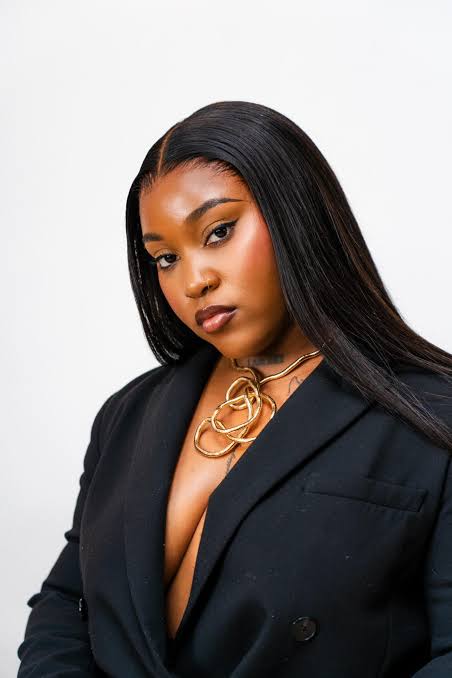
Revealed in 2022 with “Grand Bandit” (feat. Eboloko). She broke through with the TikTok-viral “Encré”, which dominated charts across Gabon, Côte d’Ivoire, Congo, and beyond. Follow-up releases include the album CYCLE, EP ‘Emma’a Part.II‘, and singles like “Frida Kahlo” and “Ça m’a laissé”, and collabs such as “C’est mon BB” (feat. Chily) and “Touché Coulé.”
Combining Afropop, R&B and heartfelt Francophone songwriting, she built a devoted online following before signing with Sony Music Africa. Her music balances vulnerability with polished contemporary production, making her one of Gabon’s strongest emerging exports.
EMMA’A represents a new generation of African female artists whose careers are being built through streaming platforms, social media, and emotionally resonant songwriting, making her Gabon’s strongest current musical export.
9. Jeune Lion (Côte d’Ivoire)
Jeune Lion has earned respect as one of Central Africa’s most technically gifted rappers. Born in Abidjan’s Marcory district, Jeune Lion is a Franco-Ivorian rapper who fuses boom bap, trap, reggae, coupé-décalé, and spiritual/political elements with bilingual lyricism.

Known for blending boom bap, trap and socially conscious lyricism, his bilingual delivery in French and English allows him to connect with audiences across linguistic divides. His work frequently addresses politics, identity and African youth culture. At a time when African rap is becoming increasingly international, Jeune Lion demonstrates that thoughtful lyricism can coexist with modern production, giving Cameroon a distinctive voice within global hip-hop.
Gaining early recognition with “J U D A” (2021), Jeune Lion released the project Before Babylone Burnt (2022). Continued with tracks like “PIGALLE” and “Nyamien son no fall,” developing a signature style that merges sacred aesthetics, urban reality, and ambitious vision.
His genre-transcending approach and bilingual accessibility make him uniquely exportable. Jeune Lion brings sharp political and spiritual commentary to global Afro-rap conversations while honoring Ivorian and broader African rhythmic traditions.
10. Tam Sir (Côte d’Ivoire)
While many artists chase crossover success as performers, Tamsir has become one of Francophone Africa’s most influential producers and cultural architects.

His productions have helped define the current sound of Ivorian youth culture, combining local rhythms with contemporary electronic production. Through collaborations and TikTok-fueled hits, his work consistently reaches audiences well beyond Côte d’Ivoire. His influence extends beyond production into shaping how Ivorian music is marketed, consumed, and celebrated online.
Tamsir proves that producers can become cultural ambassadors. By amplifying local dance culture instead of replacing it, he’s helped Ivorian music travel organically across Africa and the diaspora.
Tamsir demonstrates how producers can drive global cultural waves from Francophone Africa without compromising roots by doubling down on authentic local identity while achieving massive dominance and adoption. He demonstrates how producers can drive global cultural waves from Francophone Africa without compromising roots—his work amplifying Ivorian youth expression on international digital stages.
What unites these artists is not a shared genre but a shared philosophy. They are building global careers by leaning further into their own cultures, languages, and traditions. In doing so, they’re expanding the map of Francophone African music, proving that the next global breakthrough will come from confidently telling local stories with universal appeal.


