Children of Blood and Bone: Can Hollywood Finally Do African Fantasy Justice?


For years, Hollywood has searched for its next great fantasy franchise, often returning to familiar landscapes shaped by medieval Europe, Norse mythology, or sprawling comic book universes. Children of Blood and Bone represents a notable departure from that tradition. Adapted from Tomi Adeyemi’s bestselling 2018 novel, the film arrives as an ambitious attempt to bring a distinctly West African-inspired mythology into mainstream blockbuster cinema. That distinction alone places enormous expectations on the production. It is expected to satisfy devoted readers who have cherished Adeyemi’s vision for years while introducing global audiences to the rich cultural, historical, and spiritual influences that define the world of Orïsha.
The novel’s success made adaptation almost inevitable. Even before its publication, Hollywood studios recognized its commercial potential, triggering a competitive race for the film rights. After a lengthy development process that saw the project pass through corporate restructuring following Disney’s acquisition of Fox, the adaptation eventually found a home at Paramount Pictures under the direction of Gina Prince-Bythewood. Optioned in 2017 by Fox 2000 and Temple Hill Entertainment, it passed through directors including Rick Famuyiwa, writers, and studios Disney/Lucasfilm after the Fox acquisition before landing at Paramount in 2022. Adeyemi herself co-wrote the screenplay with Prince-Bythewood after earlier drafts stalled; the author also served as executive producer. Yet fidelity is complicated by recent events. In July 2026, Adeyemi publicly distanced herself, stating she will not watch the finished film, describing production as “the worst thing I have ever had to live through,” citing severe panic attacks, somatic pain, and feeling “attacked” and “antagonized behind the scenes.” This rupture, coming after her deep early involvement, including a planned cameo, raises legitimate questions about whether the final product fully reflects the author’s intent or has been shaped by the compromises of large-scale Hollywood filmmaking.

However, it remains a reassuring appointment. Prince-Bythewood has repeatedly demonstrated an ability to balance intimate character drama with large-scale action, most notably in ‘The Woman King,’ a film that combined spectacular battle sequences with deeply personal storytelling. That balance is precisely what ‘Children of Blood and Bone’ requires. Beneath its magical battles and mythical creatures lies a story fundamentally concerned with oppression, grief, identity, and resistance.

The fictional kingdom of Orïsha is perhaps the novel’s greatest achievement. Adeyemi builds a world inspired by Yoruba cosmology, West African history, and African cultural traditions. Although the novel does not directly recreate Yoruba religion, its influence is unmistakable in the spiritual practices, symbolism, names, architecture, and understanding of ancestral power that permeate the story. Magic in Orïsha is not simply a collection of supernatural abilities; it represents heritage, identity, and memory. The Maji, individuals born with magical gifts tied to specific spiritual lineages, become victims of systematic persecution under King Saran, whose campaign to eradicate magic leaves an entire generation disconnected from its inheritance. The fantasy elements therefore function as metaphors for cultural erasure, political oppression, and the enduring consequences of state violence.
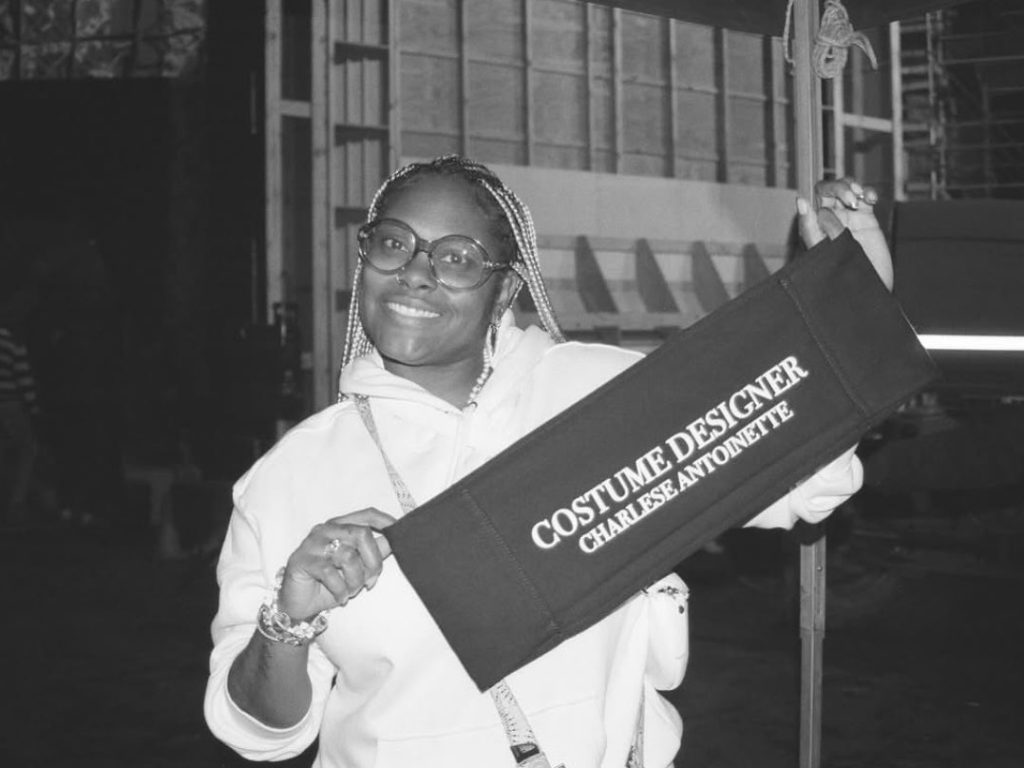


Whether the film successfully translates that thematic complexity remains its greatest challenge. Fantasy adaptations frequently reduce nuanced literary worlds into spectacles dominated by visual effects. The trailers released so far suggest that Prince-Bythewood has resisted that temptation. While the production undoubtedly embraces the scale expected of a modern blockbuster, the footage consistently foregrounds character relationships and emotional conflict rather than overwhelming audiences with spectacle alone. Principal photography ran from February to June 2025, primarily in South Africa—KwaZulu-Natal and the Western Cape—with additional work in the Canary Islands, chosen for practicality and visual grandeur while still evoking the Nigerian-inspired world. Wide landscapes, elaborate costumes, practical locations, and carefully constructed production design create a world that feels lived-in, offering hope that the film understands the importance of atmosphere as much as action.
Casting has naturally become one of the most discussed aspects of the adaptation, and in many respects it is among the film’s strongest assets. South African actress Thuso Mbedu appears exceptionally well suited to portray Zélie Adebola, the young woman whose journey anchors the narrative. Mbedu’s performances in ‘The Underground Railroad’ and ‘The Woman King’ demonstrated remarkable emotional intensity, making her a compelling choice for a character defined as much by vulnerability and trauma as by courage. Zélie is not written as an invincible heroine but as someone struggling to reconcile personal loss with the immense responsibility suddenly placed upon her shoulders. Mbedu possesses the dramatic range necessary to communicate those contradictions.

Damson Idris brings considerable charisma to Prince Inan, arguably the novel’s most psychologically complex character. Inan exists at the intersection of duty, fear, and compassion, forced to question the ideology he has inherited from his father. Idris has consistently shown an ability to portray conflicted characters whose outward confidence masks profound internal uncertainty, qualities that should serve the role well. Amandla Stenberg’s casting as Princess Amari initially generated debate, largely centered on how readers imagined the character’s appearance. Yet beyond those discussions, Stenberg’s proven ability to convey quiet resilience and emotional growth suggests she can capture Amari’s transformation from sheltered princess to reluctant revolutionary.

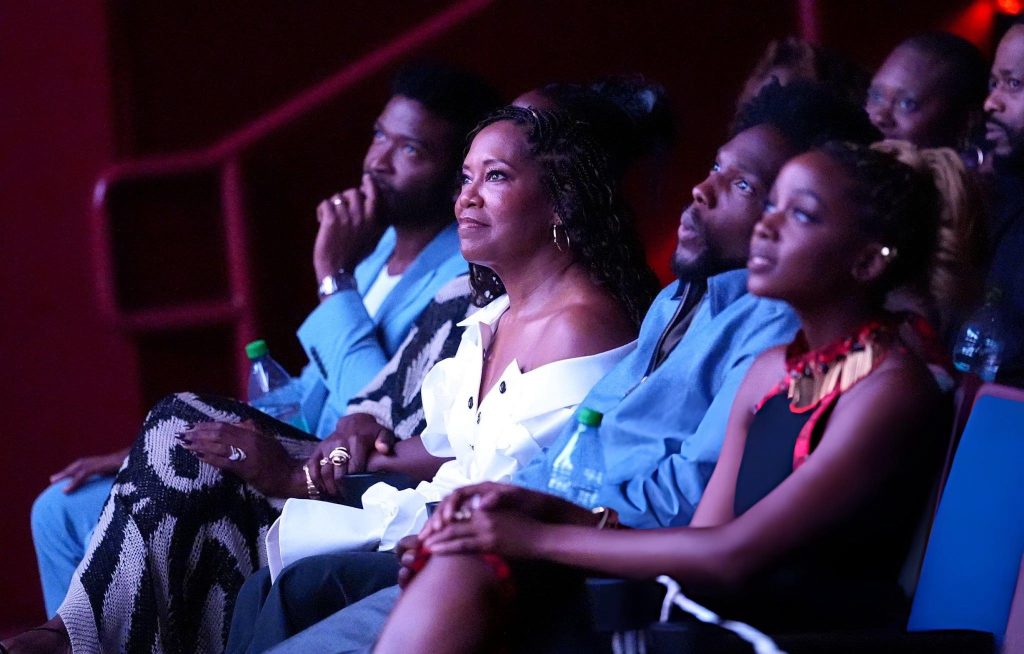
The supporting cast further strengthens confidence in the production. Chiwetel Ejiofor brings gravitas to King Saran, a character who risks becoming a one-dimensional tyrant if portrayed without sufficient complexity. Ejiofor has built a career portraying morally conflicted figures, making him an inspired choice for a king driven as much by fear as by cruelty. Viola Davis, Regina King, Cynthia Erivo, Lashana Lynch, Idris Elba, Tosin Cole, and several Nigerian performers add considerable depth to an ensemble that ranks among the strongest assembled for a fantasy film in recent years. Importantly, the casting reflects an impressive geographical diversity across the African continent and its diaspora, reinforcing the production’s commitment to authenticity without limiting itself to performers from a single nationality.

Music will inevitably play a significant role in shaping the film’s identity. The promotional campaign has already hinted at a sonic landscape that blends orchestral fantasy scoring with contemporary African musical influences. Given the story’s cultural foundations, the soundtrack has an opportunity to distinguish itself from the generic orchestral traditions that dominate much of Hollywood fantasy. Terence Blanchard, the jazz trumpeter and frequent Prince-Bythewood collaborator, composed the original score. The soundtrack is even more distinctive. Grammy-winning Nigerian artist Tems serves as executive music producer and curator—the first woman to hold that role on a major film soundtrack of this scale. Burna Boy acts as executive music consultant. The album features original Tems tracks plus contributions from Ayra Starr, Fireboy DML, BNXN, and others. Some concerns remain regarding how much of Adeyemi’s intricate mythology can realistically fit within a single feature film, particularly given the density of the source material, but such concerns accompany nearly every major literary adaptation.
Ultimately, Children of Blood and Bone faces an unusual burden. It is expected not only to succeed as entertainment but also to prove that African-inspired fantasy can command the same cultural and commercial space long occupied by Western mythologies. Judging solely from the material released thus far, the film appears to understand both the privilege and the responsibility of that task. It boasts a thoughtful director, an exceptional ensemble cast, production values worthy of its expansive world, and a source material rich enough to sustain a meaningful franchise. Whether it ultimately fulfills those ambitions will only become clear upon release, but there is ample reason to believe Children of Blood and Bone may become more than another fantasy adaptation. It has the potential to redefine what mainstream fantasy cinema looks like and, in doing so, expand the stories Hollywood considers epic enough to tell.