
Rema, Billboard and The Headies: Why Nigeria Still Struggles to Trust Its Own Music Institutions

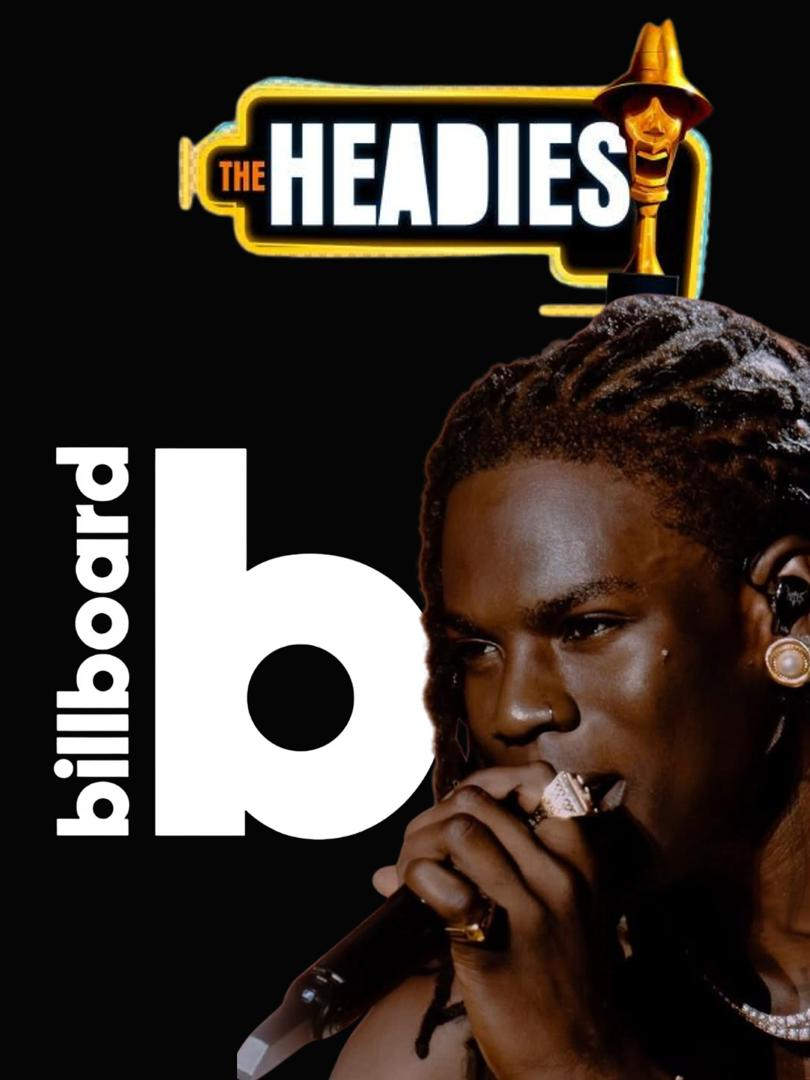
When Billboard’s list of the 25 biggest one-hit wonders of the 21st century published in June 2025 resurfaced earlier this year, and included Rema for “Calm Down,” the Nigerian internet erupted.
Commentators hauled out streaming statistics, international festival lineups, collaborations, tours, catalogue, and the generational, footprint-altering weight of “Calm Down.” The consensus was unanimous; how dare an American trade publication reduce a bona fide global powerhouse to a one-hit wonder?
The argument was not difficult to understand. Billboard’s classification was based on its own chart history, but Nigerian audiences knew that chart history could not possibly tell the whole story of Rema’s career.
Billboard had unknowingly reduced a complicated career into a simple statistic and Nigerians hated that.
Yet there is a fundamental contradiction sitting comfortably inside that outrage.
We care deeply when Billboard gets our music wrong because we intuitively understand that charts and institutions help write the definitive historical record. A chart is an assertion of legacy. It becomes evidence of success and shapes how an artist is contextualised years later.
So why, then, do we treat our own domestic institutions, our own data aggregators and our own award shows with such casual contempt?
We demand that foreign platforms treat Nigerian music with reverence, yet we routinely ignore the domestic infrastructure built to measure and celebrate that very same music.
The problem isn’t simply that foreign systems sometimes misrepresent us.
It is that we have not done enough to build systems we trust enough to argue back with.
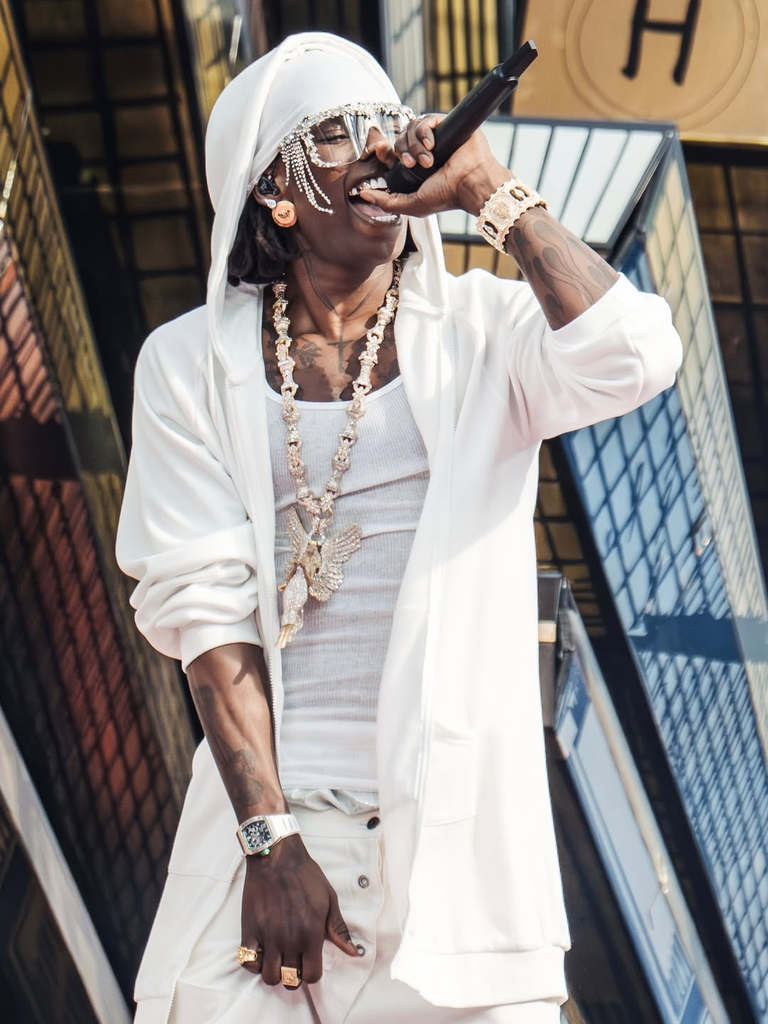
Rema, Billboard and the Power of Foreign Validation
The Rema episode it exposes how much authority we have willingly handed to international institutions.
There was nothing wrong with Nigerians pointing out that “one-hit wonder” is a poor description of Rema’s broader career.
If Billboard says an artist is a one-hit wonder, millions of people who do not follow Nigerian music closely may accept that description as fact.
That is the power of an archive.
It is also the power of a chart.
This is why the reaction to the 2026 Headies nominations is bigger than a disagreement over who deserves a nomination.
The nominations have already generated confusion over the age of some of the projects appearing on the list. Some fans saw albums they considered old and immediately concluded that the organisers had lost the plot.
But there is an important detail that changes the conversation.
According to the Headies’ official nomination page, the eligibility period for the 18th edition runs from August 1, 2024 to April 30, 2026. The organisers explicitly state that music released within that window was considered.
That creates another problem for The Headies.
If people cannot immediately understand why a project qualifies, the organisation has a communication problem.
An award cannot demand that the public respect its verdicts if the public does not understand how those verdicts are reached.
The Headies 2026 Nominations and the Eligibility Question
This becomes even more interesting when we talk about music data.
Nigeria has built a local charting infrastructure capable of documenting what Nigerians actually listen to.
TurnTable Charts tracks music performance across streaming and radio platforms and publishes the Nigeria Top 100, alongside specialised charts for songs, albums, artists, producers and airplay. Its methodology has evolved over time, but its central purpose remains to create a standardised record of music consumption in Nigeria.
TurnTable’s Nigeria Top 100 combines streaming and airplay, while its methodology has incorporated data from platforms including Spotify, Apple Music, Audiomack, Boomplay and YouTube alongside radio and television airplay.
Yet we have created a strange hierarchy around this information.
Nigerians will proudly announce that an artist has entered the Billboard Hot 100. We will debate Billboard positions with the intensity of football supporters arguing over league tables. We will celebrate Spotify Global numbers as though they are national honours.
But how often do we discuss TurnTable’s weekly charts with that same energy?
How many people know who sits at No. 1 on the Nigeria Top 100 this week?
We have elevated foreign charts into gospel while treating local charts like supplementary information.
Then we become angry when foreign institutions fail to understand our market.
There is a certain absurdity to it.
We have built a mirror and then keep asking somebody else what we look like.
TurnTable Charts vs. Billboard: Why Nigeria Ignores Its Own Music Data
The Headies was not always treated with this level of suspicion.
The awards began as the Hip Hop World Awards in 2006 and eventually became one of the most important institutions in Nigerian popular music.
For years, winning a Headies award meant something.
The Next Rated category, especially, carried enormous cultural weight. It was an institutional prediction about who was about to become important.
The problem is not that The Headies has ever made a controversial decision. Every major award show has done that. The Grammys have controversies. The Oscars have controversies. The VMAs have controversies.
Two intelligent people can listen to the same album and arrive at completely different conclusions about whether it deserves Album of the Year.
That is normal.
The difference is that established institutions have built enough credibility that people can disagree with a result without immediately dismissing the entire institution.
That is the trust The Headies needs to build.
The Headies and the Loss of Institutional Trust
Some of that distrust did not appear from nowhere.
The 2016 Headies, for example, was marked by the absence of several major artists. Premium Times reported that Nigerian artistes boycotted the ceremony, with some winners also absent and presenters collecting awards on their behalf.
By 2019, the ceremony was again dealing with conspicuous absences and logistical issues that attracted criticism. Contemporary reactions documented presenters going backstage to resolve problems while several winners were absent.
Then came the 2025 edition.
Shallipopi won Best Rap Single but reportedly did not receive a physical plaque at the ceremony because plaques were unavailable.
Odumodublvck’s Next Rated victory produced another viral moment when his microphone was cut during his acceptance speech. He later said the organisers cut him off because he was talking about Jesus; that explanation came from Odumodublvck himself and should be treated as his account of what happened, not as an independently established fact.
Then there was the car attached to the Next Rated prize. Odumodublvck eventually received the promised vehicle in December 2025, months after winning the award.
None of these incidents, individually, destroys an awards institution.
Together, however, they create an impression.
Every time an organisation mishandles something that should be simple, it spends a little bit of the credibility it needs for the complicated things.
If an award show struggles to put the physical award in a winner’s hand, people will naturally begin to question whether the more subjective decisions about Album of the Year or Artiste of the Year were handled with equal rigour.
That may not be fair but credibility rarely survives on fairness alone.

It survives on consistency.
The Headies Controversies That Damaged Its Credibility
This institutional fragility feeds directly into our obsession with foreign validation.
An artist can sell out shows in Nigeria, dominate local airwaves and soundtrack people’s daily lives. But the tone of the conversation changes when Billboard, the Grammys, MTV, BET or another international institution acknowledges them.
Suddenly, history has been made.
Suddenly, Nigerian music is taking over.
Suddenly, we have proof that our music has gone global.
There is nothing wrong with celebrating international recognition. Nigerian artists deserve those stages, and global recognition can create opportunities.
The problem begins when international institutions become the authority on whether Nigerian success is real.
Why do we need Billboard to tell us that a Nigerian artist is successful before we believe it?
Why does an American chart position sometimes carry more cultural authority here than a Nigerian chart that actually measures Nigerian consumption?
Why are we more willing to forgive the imperfections of an international system than the imperfections of a local one?
The Rema controversy makes the irony obvious.
Nigerians were angry because Billboard reduced a complicated career to a simplistic chart narrative.
Fair enough.
Imagine if our domestic music infrastructure carried enough authority that a Billboard list could be challenged with more than outrage and screenshots.
Imagine if we could point to years of respected local charts, properly documented awards, transparent criteria and reliable industry data and say: Here is the record.
Why Nigerian Music Still Depends on Foreign Recognition
This is where the conversation must resist becoming a lazy “support Nigerian institutions” sermon.
Institutions do not earn respect simply because they are Nigerian.
The Headies cannot ask Nigerians to take it seriously while giving them reasons not to.
If the organisation wants people to trust the awards, it has to make the process easier to understand.
That means clear eligibility rules, consistent communication, transparent nomination processes, reliable award distribution, professional production, better documentation and clearer explanations when controversial decisions arise.
When something goes wrong, accountability is more useful than defensiveness.
The public has responsibilities too.
If we want local institutions to matter, we cannot only pay attention when something goes wrong. We cannot ignore TurnTable charts all year and suddenly remember that Nigerian music data exists when we need ammunition in an argument with Billboard.
Respect has to work both ways.
The institutions must give us something worth respecting.
We must also be willing to respect them enough to engage with them seriously.



Hello!