The Group Therapy Debacle Is a Lagos Infrastructure Story

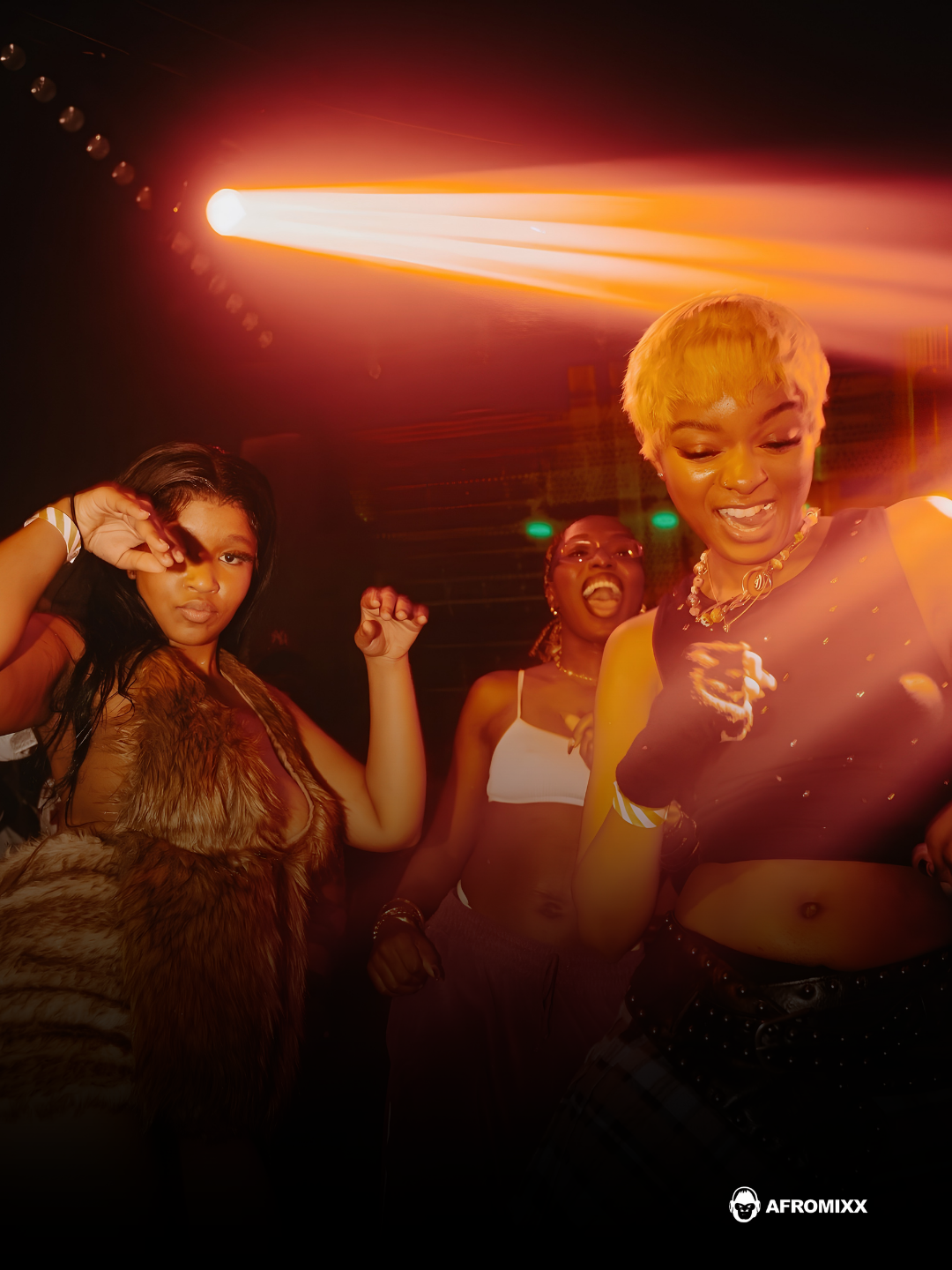
There is something almost ironic about a rave called Group Therapy becoming the subject of collective distress.
For three years, Group Therapy has built its identity around the idea that nightlife does not have to be an exercise in hierarchy. According to its founder, Aniko, you do not need a table, a bottle, a guest list, or the financial muscle to occupy the best corner of a Lagos nightclub before you can have a good night. You simply need a ticket, a willingness to lose yourself in the music and, perhaps most importantly, the faith that somewhere in this increasingly expensive city, there is still room for people to gather simply because they want to dance.
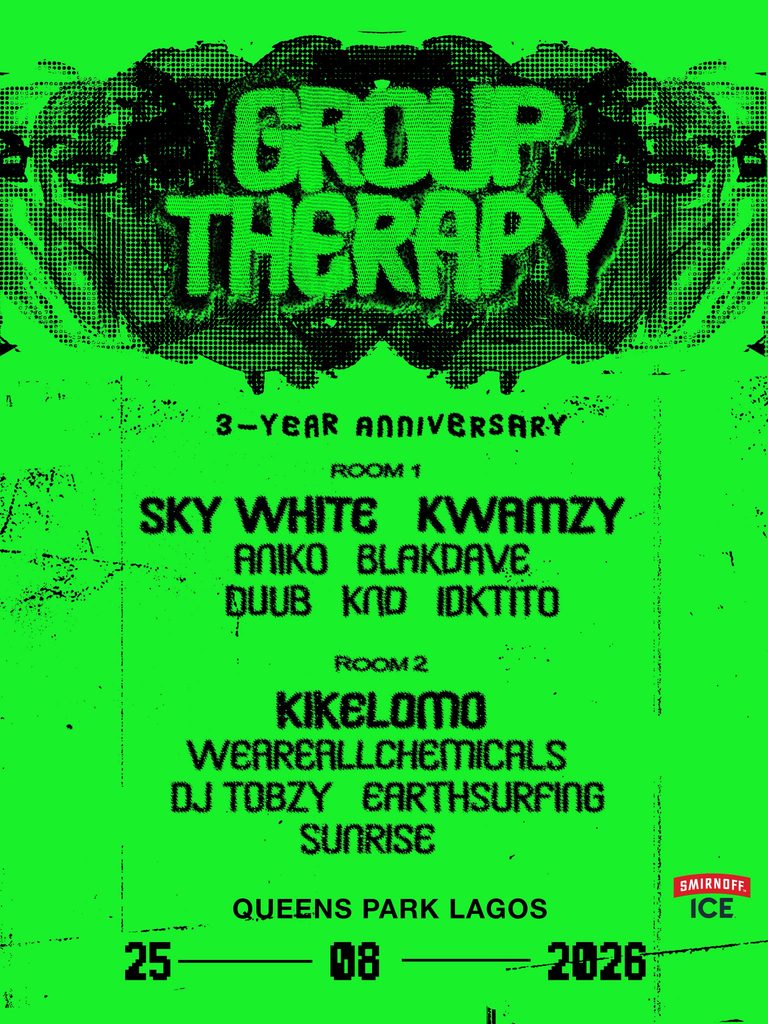
That promise is what has made Group Therapy feel different from the beginning. It is why the event has grown from a rave into something closer to a ritual for the young people who have found community in its dark rooms and electronic soundscapes and why the backlash following its third anniversary at Queens Park on August 25 has been so visceral. For many of the people who attended, the problem was not that the night failed to be perfect; Lagos nightlife has never really promised perfection. The problem was that an event built around freedom and release became, for several hours, an exercise in negotiating space, safety, and basic access.
Across the reviews that surfaced after the event, the stories began to sound eerily similar. People described being compressed into queues while trying to get their tickets scanned, with different categories of attendees funnelling through spaces that seemed incapable of absorbing the number of people arriving at once. Some likened the experience to being packed like sardines, while others described the anxiety of watching people push forward as they waited to gain entry. Guest-list complications added another layer to an already tense situation, with some attendees reportedly discovering that their names had been claimed by someone else, while restrictions around ticket transfers and screenshots left groups of friends scrambling to prove that the tickets they had bought were, in fact, theirs.
Then there was the venue itself, which became another character in the night’s unfolding drama.
Queens Park may have been able to accommodate the numbers on paper, but the experience described by attendees suggests that physical capacity and functional capacity are not the same thing. The two-room arrangement, connected by narrow and poorly lit staircases, turned something as ordinary as moving from one part of the rave to another into a potentially dangerous exercise. People reportedly missed steps; one attendee almost fell and was caught by a stranger, and for an event built around movement, the architecture seemed to be working against the crowd rather than with it.
The complaints did not end there. Phones reportedly disappeared in the crowd, with some attendees leaving the event without theirs and at least one person describing how the loss affected their ability to leave Lagos days later. There were complaints about locked bathrooms, congestion around vendors and water points, and a security operation that seemed to exist somewhere between being insufficient and overly aggressive, depending on whose experience you encountered.
And yet, buried inside many of these complaints was an interesting contradiction: some attendees still admitted that the music was good. The DJs did what DJs came to do. The sound, where people could actually enjoy it, still worked. The community was still there. The atmosphere that had made Group Therapy special had not disappeared, but it had simply become difficult to access beneath a layer of logistical frustration. This distinction matters because it is tempting to reduce the entire story to one conclusion: Group Therapy was badly organised.
Yes, there is truth in that; the organizers should be held accountable for the things that were within their control, particularly because the event is no longer small enough to be treated like an underground gathering where improvisation is part of the charm. When thousands of people are expected to arrive within a relatively short window, ticket verification cannot depend on a handful of people standing behind a table and manually searching names. Different ticket categories should not be funnelled into the same narrow entrance, and crowd management should not become an exercise in hoping that everyone behaves themselves.
Five to seven people cannot reasonably be expected to manage peak arrival for several thousand attendees, particularly when those attendees are being asked to navigate different ticket categories, guest-list verification, security checks, and entry points at the same time. These are not abstract infrastructure problems; they are operational decisions, and Group Therapy deserves the criticism that has followed them.
The same applies to the venue. Whatever circumstances forced the organisers to move away from their original plan, choosing a space is ultimately part of producing an event, and capacity should never be understood simply as the number of bodies that can physically occupy a property. A venue built to accommodate a certain number of people for a wedding, conference, or banquet is not automatically equipped to handle the same number of people dancing, moving between rooms, buying drinks, using bathrooms, and trying to leave at the same time.
This is where the Group Therapy conversation becomes more interesting, because the event’s failures are also symptoms of a much larger Nigerian problem that has been hiding in plain sight for years.
Lagos does not have enough venues for the culture it has created.
This is perhaps one of the strangest contradictions of Nigeria’s entertainment economy. Lagos has become the country’s undisputed entertainment capital and one of Africa’s most visible cultural cities, but the physical infrastructure supporting that reputation has not grown at the same speed as the culture itself. We have built an audience capable of filling arenas, festivals capable of attracting thousands of people, and a nightlife economy that has become a serious contributor to the city’s economic activity, yet we continue to improvise when it comes to finding places where all these people can actually gather.
The result is a city where warehouses become concert halls, hotel ballrooms become festival spaces, event centers become raves, and open spaces are transformed into temporary entertainment districts, not necessarily because this is the most imaginative way to build a cultural ecosystem, but because the alternatives are limited.
Lagos’ nightlife economy was estimated at ₦2.9 trillion in 2025, according to a report by TAG by Oui Capital, almost twice the previous year’s estimate. That number is significant not only because of the money it represents but also because of what it says about the scale of the ecosystem that has developed around going out in Lagos. People are spending on tickets, food, drinks, transportation, accommodation, fashion, and everything else that surrounds a night outside the house.
But what happens when the economic value of an industry grows faster than the infrastructure that carries it? Eventually, the cracks become visible, and Group Therapy happened to find one of those cracks on August 25.
The shortage of suitable venues is not merely about the number of buildings available; it is about how those buildings are designed. A proper large-scale cultural venue needs multiple entry and exit points, sensible crowd-flow systems, emergency access, adequate lighting, distributed bathrooms, reliable power, loading areas for production equipment, security infrastructure, parking, and, increasingly, some thought about how thousands of people will get home when the music stops.
That is a very different proposition from finding a hall that can technically fit 3,000 people. The distinction is important because the modern Lagos entertainment audience is not particularly interested in sitting still. The rise of rave culture, electronic music, Afrobeats festivals, and hybrid live experiences has created an audience that wants to move through spaces, discover different rooms, interact with DJs and artists, and experience the event as an environment rather than a stage in front of a seated audience. The architecture has to understand the culture. Too often, ours does not.
This is where the economics of producing events in Nigeria make an already difficult problem even harder. Every improvement costs money, and the cost of producing large-scale entertainment has risen alongside virtually everything else. Power is expensive, diesel is expensive, security is expensive, equipment is expensive, venue hire is expensive, and transport is expensive. Even the seemingly minor things—additional lighting, more crowd marshals, more security personnel, more water points, more welfare staff—eventually become another line on a production budget that is already under pressure.
For a collective like Group Therapy, this creates a particularly difficult balancing act because affordability is part of the brand’s appeal. The rave exists partly as an alternative to Lagos’ increasingly expensive table culture, where a single night can become an extravagant financial transaction disguised as leisure. Its audience is largely made up of young people who want to participate in nightlife without surrendering the economics of an entire month to a bottle of liquor and a reserved table.
That means the organizers cannot simply pass every additional production cost on to the audience without eventually changing the very character that made Group Therapy attractive in the first place. And this is where the ticketing controversy becomes more complicated too. Restricting ticket transfers and screenshots may be an understandable attempt to fight fraud, duplication, and the thriving secondary market around popular events, but an event is also a social product. People buy tickets for friends. Someone decides to attend at the last minute. Someone else cannot make it and gives their ticket to a sibling. A group of friends pools money and figures out the logistics later.
The system has to protect the event from fraud without making ordinary behavior feel like a criminal offense. A better digital verification system, where tickets can be securely transferred, linked to verified identities or groups, and scanned without requiring staff to manually resolve every dispute at the gate, would address part of the problem.
But even the best ticketing system cannot fix a staircase, and that is the point we keep returning to. There is only so much a promoter can optimize when the physical environment itself is not designed for the scale of the demand. Nigeria’s creative economy has spent years being discussed as the next great economic frontier, but conversations about its future often focus on the glamorous parts: streaming numbers, global tours, billion-dollar valuations, international festivals, brand partnerships, and the growing influence of African music and culture around the world.
Less attention is paid to the boring infrastructure that makes all of those things possible. Where do the artists perform? Where do the audiences gather? Where do the trucks unload? Where do people park? How does a crowd of 5,000 leave a venue at the same time? What happens when the power goes out? Where are the emergency exits? How many ambulances are nearby? What happens to the person who loses their phone at 1 a.m.?
These questions are not peripheral to the creative economy. A city cannot continuously market itself as a global entertainment destination while leaving promoters to search for rooms that were never designed for the culture they are trying to build.
This is why the Group Therapy backlash should not simply disappear once the timeline moves on to the next controversy. The organisers have a responsibility to learn from what happened, but the industry also has an opportunity to ask a much larger question about where Nigerian nightlife is going.
If Group Therapy is going to continue growing, the answer cannot always be another last-minute venue scramble. There needs to be a serious conversation around permanent or semi-permanent spaces built specifically for the kind of cultural events Lagos increasingly produces. The organizers have reportedly considered creating a home for the community, and perhaps that is the direction the rave’s growth is naturally pushing it towards: a space where the architecture is designed around the experience rather than the experience being forced to negotiate with the architecture.
Other promoters will eventually face the same question, because Group Therapy is not the only event trying to solve this problem. As more Nigerian artists tour internationally, as more electronic and alternative music communities grow, as festivals become larger and audiences become more willing to pay for experiences beyond traditional club nights, the pressure on Lagos’ limited venue ecosystem will only increase.
The city therefore needs to begin thinking about cultural spaces as economic infrastructure, not decorative additions to the idea of a modern city. Private developers can build multi-purpose entertainment spaces into large developments. Government can create incentives for investment in cultural infrastructure and strengthen standards around crowd safety and venue design. Transport planning can account for major entertainment clusters rather than treating nightlife as an inconvenience that begins after business hours.
And promoters, for their part, have to become more rigorous about the difference between what a venue can accommodate and what it can safely host.
There is also something to be said for the audience. The young people who make Lagos nightlife what it is deserve better, but they also deserve to recognize that a sold-out event is a shared responsibility. Pushing through a queue, refusing instructions, creating unnecessary pressure at entrances, or treating other attendees as obstacles only makes a badly designed system more dangerous.
Group Therapy did not create Lagos’ infrastructure problems, but it has reached the point where those problems can no longer be hidden behind the romance of the underground. The rave has become too big to be treated as a scrappy community event that can simply find a room, plug in a sound system, and trust that everything will work itself out.
The irony is that the rave itself has done exactly what successful culture is supposed to do. It created demand. It built community. It found an audience hungry for something different and convinced thousands of people that there was another way to experience nightlife in Lagos. Now the city has to decide whether it is willing to build for that audience.