Can You Be a Feminist and Still Enjoy Afrobeats?

There’s a video making the rounds on TikTok where a woman states plainly that claiming feminism while blasting Afrobeats is a contradiction. The clip includes lyrics that linger on bodies, on what women can provide in the moment, on how quickly they can be replaced or discarded. Other videos follow the same line: compilations of verses that reduce presence to availability, choruses that treat desire as something men pursue and women either deliver or complicate.
It raises an uncomfortable question.
If the soundtrack to everyday life constantly reduces women to their bodies, what does it mean to keep dancing?
More importantly, what does it mean to genuinely enjoy the music anyway?
Loving music has never been a purely intellectual exercise. Songs take up residence in your head long before personal politics arrive. They become attached to birthdays, heartbreaks, road trips, weddings and nights that refuse to leave the memory. They remind listeners of people they have loved and versions of themselves they have since outgrown.
That is what makes this conversation far more complicated than it first appears.
Does Afrobeats Have a Misogyny Problem?
Afrobeats has produced some of the most beautiful love songs. It has also produced lyrics that casually objectify women, celebrate emotional manipulation, reward cheating and blur the line between affection and possession.
Threaded through many of its biggest records are familiar habits in the way women are written. Some songs reduce them almost entirely to physical descriptions. Others assume consent rather than expressing it. Occasionally, a lyric sparks widespread backlash as happened with certain Odumodu snippets that prompted accusations of promoting violence against women. Yet because these moments are wrapped inside infectious melodies, polished production and irresistible hooks, many listeners sing along before they ever stop to consider what is being said.
The criticism, then, is not entirely without merit.
It is also not unique to Afrobeats.
Hip-hop, dancehall, rock and pop have all wrestled with similar questions. Popular music has long reflected cultures where masculinity is performed through dominance and where women are too often written as rewards, possessions or symbols of status
The Question Music Fans Have Always Faced
The debate expands beyond Afrobeats.
Can a listener separate art from the person who created it?
The question has resurfaced repeatedly across generations of music fans.
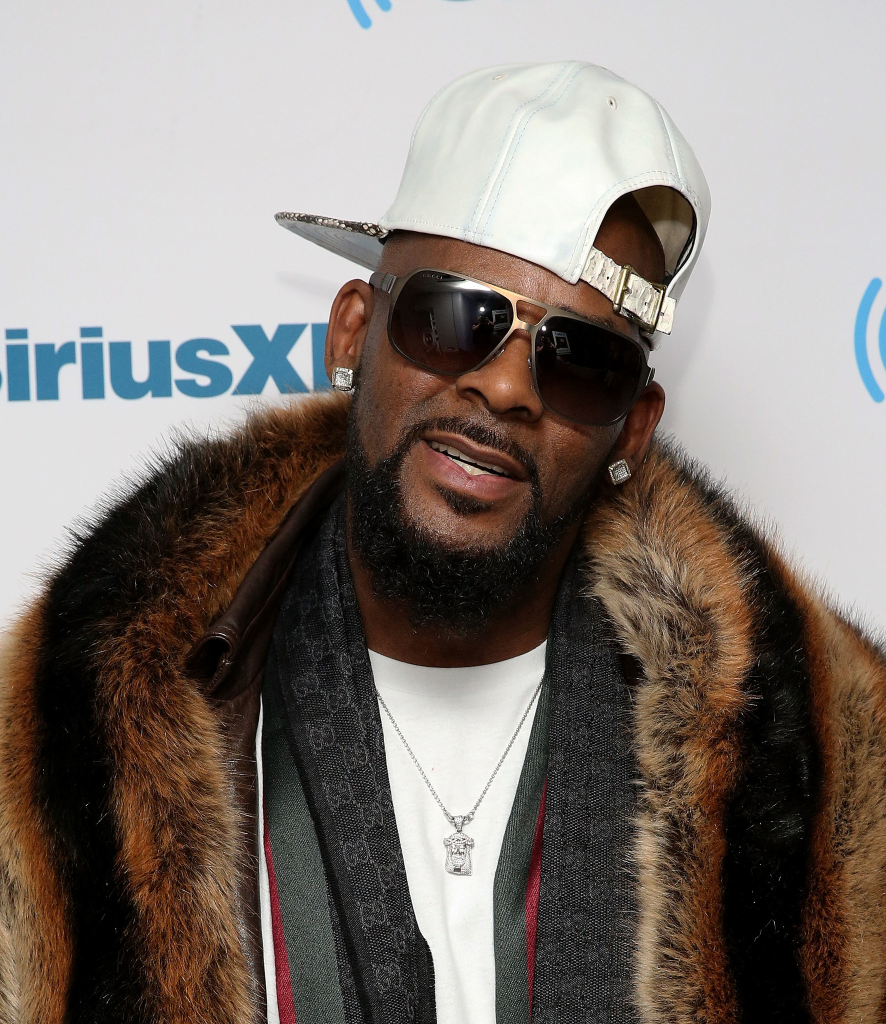
R. Kelly’s catalogue remains one of the clearest examples. For some listeners, his music became impossible to hear once the allegations against him could no longer be separated from the songs. Others still return to records that have become attached to weddings, family gatherings or deeply personal memories, arguing that those moments now belong to the listeners rather than the man who recorded them.
Kanye West presents a different dilemma. His early albums continue to influence conversations about production, sampling and songwriting, yet many fans admit that his public statements have fundamentally altered the way they experience his work. The music has not disappeared; the relationship with it has simply changed.

Chris Brown continues to divide opinion for similar reasons. His technical ability as a performer remains widely acknowledged, while his documented history of violence leads many listeners to reject his music entirely. Others continue listening despite that history, revealing how differently audiences draw their own ethical boundaries.

The same questions now surround Diddy. As recent legal developments continue to unfold, many listeners find themselves revisiting music that once defined entire eras with a different set of ears. Others point out that many of those records were collaborative works involving producers, writers and performers whose contributions exist independently of one individual’s conduct.

None of these examples produces a universal answer.
Instead, they reveal something more interesting.
Every listener seems to draw the line in a different place.
Is Listening the Same as Endorsing?
That is where the conversation becomes even more difficult.
If every song that conflicts with a listener’s values disappears from a playlist, how much music survives?
Should songs about infidelity be rejected by people who believe in commitment?
Should revenge songs disappear from the libraries of people who value forgiveness?
Should stories of violence only be consumed by those willing to defend violence?
Art has rarely functioned as a moral instruction manual. Some of the greatest works ever created explore ideas, emotions and behaviours their audiences would never defend in real life. Listening does not automatically equal agreement.
Yet streaming complicates that argument.

Every play contributes to algorithms, royalties and visibility. Choosing not to stream an artist can feel like an ethical decision, but modern music is rarely the work of one person alone. Producers, engineers, songwriters, instrumentalists and background vocalists all contribute to records that may later become morally complicated through the actions or words of a single individual.
The decision to press play therefore becomes less straightforward than it first appears.
So, Can You Be a Feminist and Still Enjoy Afrobeats?
If the answer were as straightforward as TikTok sometimes makes it sound, the conversation would probably have ended already.
Instead, it keeps becoming more complicated.
Part of that complexity lies within the industry itself.
Many of the women dominating Afrobeats continue to collaborate with, publicly support and maintain friendships with some of the very male artists whose lyrics or behaviour have drawn criticism. They appear on the same records, perform on the same stages and celebrate one another’s successes. That reality doesn’t invalidate the criticism of misogynistic lyrics, but it does make the boundaries less obvious.
If the artists themselves are navigating those relationships in ways that aren’t always clear-cut, it becomes difficult to insist that listeners must arrive at one universal answer.
Perhaps that’s because no one consumes music in exactly the same way.
For some, a problematic lyric is enough reason to skip a song forever.
For others, the line isn’t crossed until an artist’s actions outside the music become impossible to ignore.
Others separate individual songs from the people who made them, while many simply continue listening, fully aware of the contradiction.
None of those responses exist in a vacuum.
They are shaped by personal values, lived experiences, cultural attachment and, sometimes, the memories that particular songs carry.
Which is why the question refuses to produce a simple answer.