Blaqbonez, Chike, KFMD, Magixx and More on New Music Friday


Another Friday, another flood of releases, but this week’s drop feels particularly shaped by atmosphere. Across Afrobeats, Afro-R&B, and the increasingly global intersections of pop, artists leaned less into explosive experimentation and more into mood, chemistry, and emotional texture. From smooth late-night confessions and vulnerable Afro-soul records to stadium-sized collaborations engineered for worldwide reach, this week’s music understands the power of feeling immersive rather than overwhelming. Whether it’s the polished charisma of international link-ups, the quiet honesty of introspective songwriting, or the effortless groove of records built for replay value, New Music Friday arrives with songs that don’t just demand attention; they settle into rotation naturally.
Blaqbonez ft. Asake – Chanel
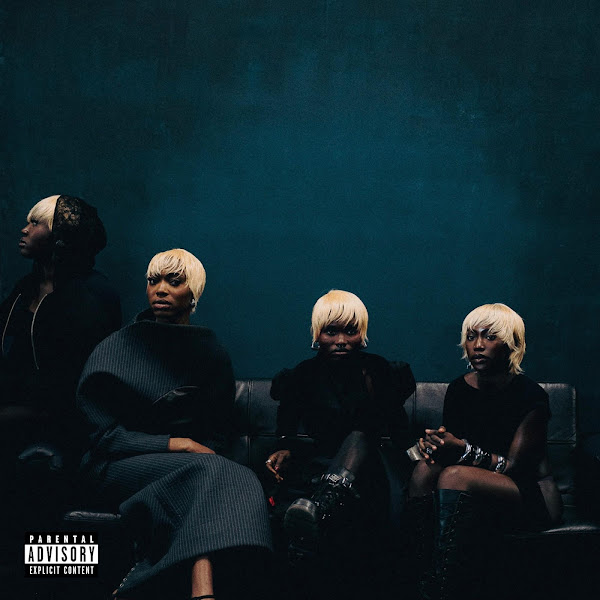
Blaqbonez, the Chocolate City rap chameleon, links up with Asake on “Chanel”, a track that’s been bubbling on social media platforms and studios since those viral April studio clips surfaced. This is a full-circle moment, as both artists crossed paths back in their Obafemi Awolowo University days, and Blaqbonez has been teasing the chemistry. Produced by Johnson IP (Sleepless IP) and Spykida, the beat is a masterclass in contemporary Nigerian fusion. It rides a laid-back yet infectious groove, a meld of smooth percussion, glossy synth layers, and a subtle bounce that keeps the energy cruising rather than exploding. There’s a luxurious, almost cinematic sheen to it: sparkling hi-hats, warm bass undertones, and melodic flourishes that evoke high-end fashion and fit the title. It’s not the raw, street-trap energy Blaqbonez sometimes leans into, nor is it peak Asake Fuji-Amapiano chaos.
Blaqbonez opens strong with the intro and chorus, setting a confident, playful tone: Fresh Prince of Bel-Air / On my neck, IYOO CARTEL / Bad girl say she want Chanel / F’okan bale, Nike, everything correct / Me, I hear say you dey vex / Hmm, pẹ̀lẹ́ — witty wordplay, luxury name-drops Chanel, Cartier vibes, and Nike as shorthand for perfection and that signature Blaqbonez flow that switches between rap precision and melodic sing-rap. It’s boastful but light-hearted, with Yoruba-infused lines adding cultural flavour and relatability. He handles the bulk of the song, anchoring it with charisma. Asake slides in, literally, with a swagger-filled verse that feels like a highlight reel. He brings his signature rhythmic bounce and ad-libs, elevating the energy. His delivery complements Blaqbonez perfectly — where Blaqbonez already laid the rhythmic foundation of “Chanel”, Asake followed similarly with a loose, hypnotic, and rap-sing delivery.
Blaqbonez’s clever punchlines and Asake’s magnetic presence turn “Chanel” into a celebration of their lanes colliding. “Chanel” hits that sweet spot with an instantly replayable sound without being throwaway. Blaqbonez manages to perfect the sound, cadence and overall vision with star power and execution. The production gives it legs for playlists and parties, the lyrics deliver memorable hooks and flexes, and the Blaqbonez-Asake pairing feels surprisingly sacred.
“Chanel” is music built around mood, attraction, fashion-coded luxury, and cool-factor performance. But even within those familiar Afropop themes, both artists inject enough identity to stop the song from becoming generic. Asake’s street-rooted melodic confidence contrasts nicely with Blaqbonez’s ironic playboy energy. One sounds spiritually grounded in success; the other sounds amused by it.
KFMD ft. Qing Madi, BNXN & Victony – Come Slide

There’s a softness to “Come Slide” that immediately separates it from the louder end of contemporary Afrobeats collaborations. In an era where songs often arrive bloated with unnecessary switches and overstimulation, KFMD, Qing Madi, BNXN, and Victony choose atmosphere instead. The record leans into intimacy, restraint, and melodic chemistry, allowing every artist to exist naturally inside the same emotional space rather than fighting for dominance.
Built on smooth Afro-R&B textures, “Come Slide” feels like music designed for late-night conversations, slow drives, and quiet obsession. The beat produced in the KFMD ecosystem is a bright, playful Afrobeats groove with strong Afro-pop DNA—punchy percussion, melodic guitar licks that shimmer in the background, and a bouncy rhythm section that creates an effortless pocket. It’s polished without being overproduced—light and infectious rather than heavy or bass-heavy. The groove has that irresistible summer quality: warm, danceable, and designed for repeat listens, car rides, and beach hangs.
Qing Madi remains the emotional centre of the track. Over the last two years, she has gradually carved a lane where vulnerability and melody coexist effortlessly, and “Come Slide” continues that trajectory. Here, she sounds calm, assured, and fully aware of how to control the mood of a song without oversinging. Her voice glides through the production with a kind of understated elegance, setting the tone before BNXN enters with the melodic fluidity he has practically mastered at this point. BNXN understands rhythm in a way many vocalists don’t; he bends syllables around percussion rather than simply singing over it. ‘Come Slide’ is fun, flirtatious, and celebratory — attraction, good vibes, living in the moment, and that classic ‘come through’ invitation, blending English with Pidgin flavour, keeping it relatable and catchy.
Then there’s Victony, whose presence subtly changes the energy of the record, slightly disrupting it. Victony has always excelled at sounding emotionally detached and emotionally invested at the same time, a quality that makes his features memorable even when they’re brief. His verse on “Come Slide” arrives with relaxed confidence, adding texture and emotional contrast to the record’s already dreamy atmosphere.
KFMD’s role on the song is equally important because the production direction holds the collaboration together. There’s a noticeable consistency in the sonic choices tied to recent KFMD-associated releases, particularly records like “Pepper Me” with Qing Madi and Zinoleesky, where mood and groove take priority over explosive structure. “Come Slide” follows that same philosophy. The beat never rushes, with transitions that feel seamless while still retaining momentum.
Chike ft. Syemca – Pity My Soul

Some heartbreak records don’t announce themselves loudly, nor do they rely on dramatic crescendos or excessive vocal acrobatics to communicate pain. Instead, it settles quietly into your chest and lingers there. “Pity My Soul” by Chike and Syemca belongs to that category of music — emotionally heavy, understated, and deeply human.
The song arrives as a reunion between two artists whose chemistry feels rooted beyond music. Chike teams up with his brother Syemca on “Pity My Soul”, following their previous successful collaboration “Love Egbuomo”. Chike and Syemca’s relationship predates the industry itself, with Syemca reportedly playing a major role in encouraging Chike to pursue music professionally.
From the opening seconds, the production understands restraint. Produced, mixed, and mastered by DeeYasso, the beat is a polished, minimalist Afro-soul/Afropop fusion. It features smooth instrumentation — subtle percussion, warm melodic lines, and atmospheric elements that prioritise mood over high-energy bounce. The production stays understated, creating space for the vocals and lyrics to lead.
On “Pity My Soul”, Chike sounds emotionally exhausted rather than theatrically heartbroken. He has built an entire career around emotional transparency, but what makes him compelling is how conversational his vulnerability feels. There’s a weariness in his delivery that makes lines like “Whenever you are not in my corner, I pity my soul” land with genuine sincerity instead of polished melodrama.
The song thrives on relatability and cultural familiarity. One of the record’s standout moments — “I go trek from here to Okokomaiko” — instantly grounds the emotion in lived Nigerian reality. It’s not just a clever lyric; it’s a geographical metaphor for devotion, using a recognisable Lagos reference point to express the lengths someone is willing to go for love. The song dives into themes of love, dependency, pain, vulnerability, and inner turmoil. “Whenever you are not in my corner / I pity my soul / Call on me I go trek / From here to Okokomaiko / Ah ah ah my medulla is not in control”
It’s a raw expression of how absence or emotional disconnect leaves one feeling lost and heavy-hearted. Chike delivers with his trademark wounded, expressive voice — honest and deeply human, sounding genuinely affected. Syemca adds harmonic texture and complementary layers, strengthening the brotherly chemistry without overpowering the lead. Their vocal blend feels natural and familial. The multilingual songwriting also strengthens the song’s emotional texture. Moving between English, Pidgin, and Igbo, Chike and Syemca avoid sounding overly polished or performative. The language shifts feel natural, like real conversations between lovers trying to salvage emotional closeness. That authenticity gives the song its replay value.
By the final chorus, the song leaves behind a feeling that’s difficult to fake — emotional fatigue wrapped inside tenderness. And sometimes, that quiet honesty is far more powerful than spectacle.
LISA, Anitta & Rema ft. FIFA Sound – Goals

Some songs are built for charts. Some are built for stadiums. “Goals” by LISA, Anitta, and Rema — released in collaboration with FIFA Sound — is clearly aiming for both. The record arrives with the glossy ambition of a global sports anthem, but what makes it interesting is how each artist still manages to preserve traces of their individual identity inside a song engineered for worldwide consumption.
From the first few seconds, “Goals” sounds massive. The production leans into bright percussion, cinematic synths, pulsating drums, and chant-ready melodies designed to thrive in arenas, highlight reels, and tournament montages. There’s an intentional sense of movement throughout the song; everything feels built around momentum. Even the beat structure mirrors the emotional rise-and-fall of a football match — tension, release, celebration.
FIFA Sound collaborations often struggle with sounding overly corporate or emotionally empty, but “Goals” avoids complete sterility because of the artists involved. Each performer brings a distinct rhythmic personality that stops the record from collapsing into generic sports-pop territory.
LISA arrives with the kind of polished charisma that has defined her global crossover presence beyond BLACKPINK. Her delivery is sharp, rhythmic, and performance-driven, fitting naturally into the song’s high-energy framework. She understands spectacle, which is essential on a record like this. Even when the lyrics lean heavily into motivational clichés and victory imagery, her confidence sells the performance.
Anitta brings warmth and bounce to the track. Her presence subtly shifts the energy from pure stadium anthem into something danceable and flirtatious. There’s a Latin-pop fluidity in her delivery that complements the song’s global ambition, preventing the production from feeling too rigid or militaristic.

Then there’s Rema, whose inclusion feels particularly significant given Afrobeats’ continued integration into mainstream international pop infrastructure. Rema approaches “Goals” with controlled coolness rather than explosive theatrics. His melodic instincts naturally soften the song’s more manufactured edges, adding groove and personality to an otherwise highly structured production. Even within a FIFA-sponsored anthem, he still sounds unmistakably like himself.
Lyrically, “Goals” operates within expected territory — ambition, winning, elevation, confidence, overcoming pressure, with sports anthems thriving more on emotional immediacy than lyrical complexity. The key is whether the energy feels convincing enough to soundtrack moments of collective excitement, and “Goals” largely succeeds in that regard.
What’s most interesting is how the song reflects the current globalization of pop music. A Thai superstar, a Brazilian hitmaker, and a Nigerian genre-shifting artist collaborating under FIFA’s banner would’ve sounded almost improbable a decade ago. Now it feels entirely natural. “Goals” exists at the intersection of streaming culture, football spectacle, and international pop hybridity — where geography matters less than reach, algorithmic visibility, and cross-market appeal.
The production also smartly leaves room for rhythmic diversity without losing cohesion. Afro-influenced percussion, Latin bounce, electronic pop textures, and chant-style hooks all coexist without sounding stitched together by committee. That balance keeps the song from becoming sonically overcrowded.
Magixx ft. Fola — Juice & Liquor

“Juice & Liquor” by Magixx and Fola leans into a mood-first, structure-second format — a late-night Afrobeats record built around intoxication as both metaphor and atmosphere. Not just alcohol, but the blur between desire, escape, and emotional surrender.
From the opening, the production sets a slow-burning tone. It’s built on mid-tempo percussion, hazy log drums, faint synth washes, and a bassline that never really rushes itself. Everything feels slightly smudged at the edges, like the record is meant to sound the way a dimly lit room feels after a long night. There’s no aggressive drop or attention-grabbing switch; instead, the beat stretches itself out and allows repetition to do the heavy lifting.
Magixx has always occupied a space in Afrobeats where vulnerability and seduction meet without conflict. On “Juice & Liquor”, he sounds fully aware of that balance. His delivery is light, almost airy, but still emotionally grounded. The lyrics lean into familiar themes of romantic intoxication, emotional dependency, and late-night confession, but what makes it work is the restraint in his tone.
Fola, on the other hand, brings contrast. Where Magixx floats, Fola anchors. His vocal tone carries a slightly rougher texture, more street-tinged and immediate. That contrast is what gives the record its internal tension. His lines feel more conversational, less polished, like thoughts being spoken rather than performed. It creates a push-and-pull dynamic that keeps the song from collapsing into monotony. Together, both artists meet in the same emotional space. The “juice and liquor” framing isn’t just aesthetic branding; it’s a structure for how the song moves. The lyrics circle the idea of losing control willingly, of letting emotion blur judgement, and of desire that feels easier when slightly numbed. It’s not heartbreak in the traditional sense; it’s the aftermath of it, where feeling too much and feeling nothing start to sound the same.
There’s also a subtle maturity in how both artists approach space. The gaps between vocals, the softness of transitions, the refusal to overcrowd the mix — all of it contributes to a record that feels intentionally intimate rather than commercially maximalist. “Juice & Liquor” ultimately works because it knows its own temperature, sitting somewhere in between, where decisions are slower, feelings are heavier, and everything sounds slightly closer than it should.
LISTEN TO THE FULL NEW MUSIC FRIDAY PLAYLIST BELOW