Omah Lay Is Yet to Explore the Full Potential of His Genius

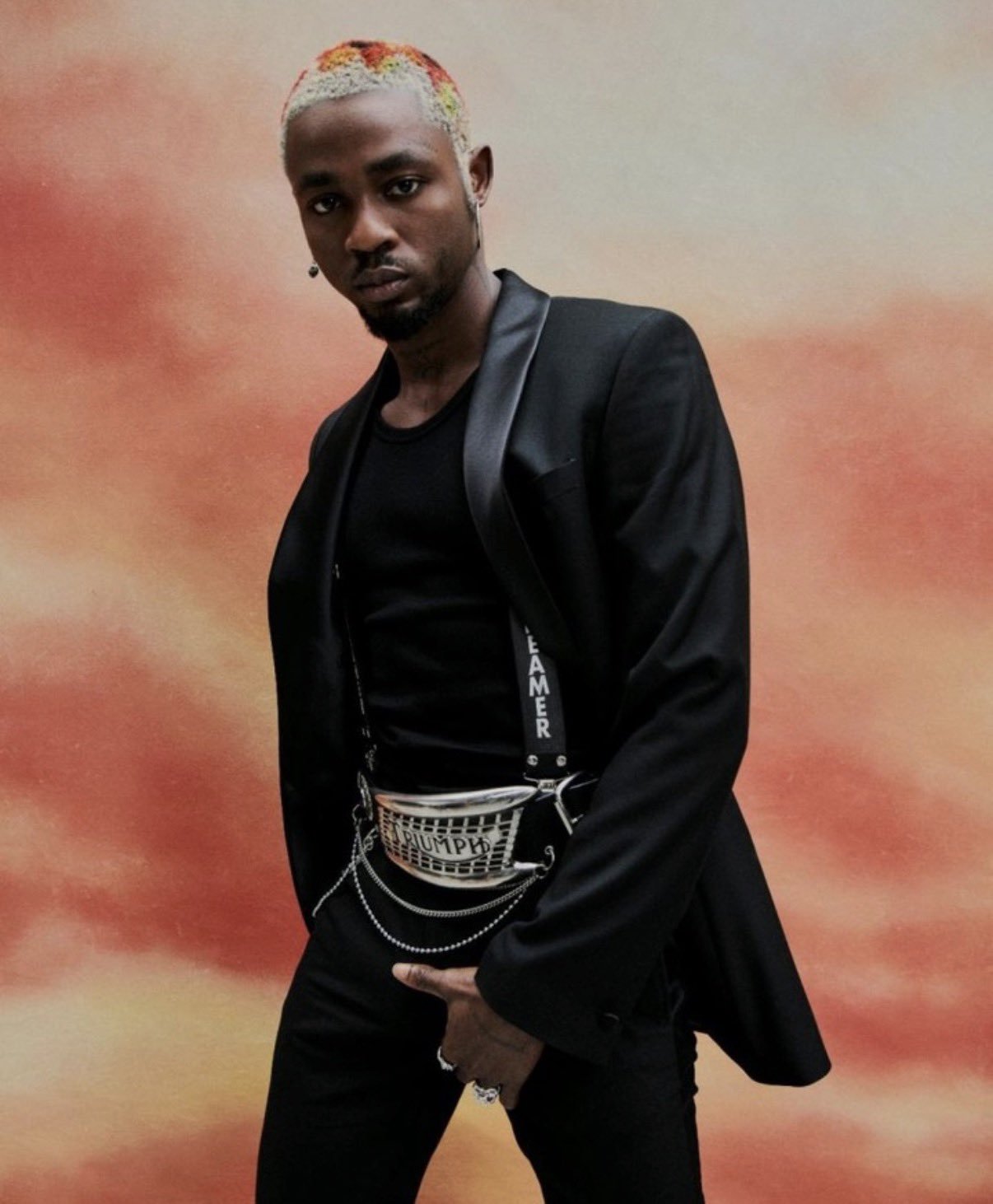
Omah Lay has always been an interesting case in Nigerian music. Few of his contemporaries have managed to turn personal turmoil into such a recognisable musical identity without losing the appeal of mainstream pop. From the moment he arrived with Get Layd in 2020, Stanley Omah Didia established himself as an artist whose songwriting, peculiar vocal delivery and production instincts could make even the most uncomfortable emotions sound inviting. There was something almost effortless about the way he translated melancholy, lust, loneliness and youthful excess into records that listeners could dance to, cry to, or simply lose themselves in. He has become particularly adept at translating his innermost experiences into music. What remains less apparent, however, is how much further he is willing to take the creative worlds he constructs around them.
His debut EP, ‘Get Layd’, was an introduction that needed very little convincing. Songs like “Bad Influence”, “You” and “Damn” quickly established his appeal, particularly during a period when listeners were finding companionship in music from a distance. He followed it with ‘What Have We Done’, a four-track EP that further demonstrated his knack for melodic songwriting and his ability to make vulnerability commercially appealing. By then, Omah Lay was already proving that his music could travel beyond the circumstances that inspired it.
However, it was his debut album, ‘Boy Alone’, released in July 2022, that gave his artistry a more definitive identity. The 14-track project was a departure from the relatively carefree disposition of his earlier records. Here, the familiar mid-tempo Afropop foundations were shrouded in hazier, more atmospheric production, with melancholic synths, muted percussion and guitar arrangements creating a soundscape that often felt as though it were unfolding inside someone’s head. Omah Lay was no longer simply singing about love and its complications. He was documenting the psychological burden of fame, isolation, substance use, romantic disappointment and the difficulty of understanding oneself.
The deluxe edition, released in June 2023, extended that experience with six additional records, including “Reason”, “Come Closer”, “It’s Yours”, “Imagine” featuring Aitch, “Joanna” and “Soso” featuring Ozuna. The additions gave the album another commercial and collaborative dimension, particularly with the international reach of “Soso” and the Justin Bieber-assisted “Attention” already helping to introduce Omah Lay to a wider audience. The original album had become a defining statement of his career, and its extended edition further cemented its place in the Afrobeats conversation.
In hindsight, ‘Boy Alone’ did more than establish Omah Lay as a formidable songwriter. It gave listeners a language for understanding his artistry. The singer had found a way to make his personal experiences feel universal, while retaining enough peculiarities in his delivery and musical arrangements to remain unmistakably himself. It was a difficult standard to follow, especially for an artist whose creative identity had become so closely tied to the emotional honesty of his music.
Four years later, Omah Lay ‘Clarity of Mind’ Arrives
Four years later, the anticipation surrounding his sophomore album was understandably substantial. Unfortunately, the journey to CLARITY OF MIND was anything but straightforward. Omah Lay had initially teased a different creative direction, only to publicly claim that another musician had appropriated his sonic ideas and album concept. He eventually scrapped the material and started again. The situation became one of the more talked-about episodes in his career, with fans following his public outbursts, subsequent delays and the uncertainty surrounding the album’s eventual arrival. In an interview with The FADER, he explained that the experience had been hurtful, although he had eventually moved past it. He also revealed that his hands were involved in almost every production on the eventual album, even when he did not necessarily take the credits.
Some of the theatrics surrounding the rollout were beginning to feel excessive, and even among his most devoted supporters, there were questions about the repeated delays and the need to continually manufacture anticipation. Nevertheless, none of this should distract from the obvious: Omah Lay is an exceptional creative mind. If anything, the circumstances surrounding the album made its eventual arrival even more interesting.
Released on April 3, 2026, CLARITY OF MIND was presented as the product of an extended period of introspection, withdrawal and self-discovery. Omah Lay had taken time away from the relentless demands of performing, touring and maintaining a public image to reconnect with himself. He spoke about spending time with family, exploring spirituality and learning to accept himself without constantly searching for another version of who he ought to be. The album was therefore intended to represent a new emotional chapter, one in which the artist was no longer entirely consumed by the turbulence that informed his debut. And musically, it is an impressive return.
The opening track, “ARTIFICIAL HAPPINESS”, immediately introduces the contradictions that underpin the album. Omah Lay is still wrestling with his demons, even as he attempts to convince himself that he has found some form of peace. The production is restrained but sufficiently textured, allowing his peculiar vocal inflections to carry the weight of the record. “JAH JAH KNOWS” follows with a more reflective disposition, as he acknowledges the uncertainty surrounding his ambitions and the consequences of pursuing them. Its crisp percussion, soft strings and synth arrangements establish a meditative atmosphere, although the song occasionally feels like an extension of the preceding track rather than a distinct emotional destination.
“CANADA BREEZE” is one of the album’s immediate highlights. Built around jagged drums and a buoyant melodic arrangement, it finds Omah Lay reflecting on the endless pursuit of success and the peculiar frustration of travelling so far without feeling as though one has arrived. His opening lines establish the sentiment beautifully, and the infectious repetition makes the record particularly memorable. “WATER SPIRIT” takes a more uninhibited route. Driven by heavy log drums and a sexually charged narrative, it revisits the hedonistic side of his artistry, although its suggestive undertones and production do not necessarily offer much beyond the immediate pleasure of the record.
Then comes “DON’T LOVE ME”, one of the album’s more emotionally compelling moments. Over sparse percussion, soft piano chords and airy synths, Omah Lay sounds almost pleading as he navigates the contradictions of wanting affection while struggling to make himself emotionally available. It is a familiar subject in his catalogue, but his delivery gives it a certain tenderness. This vulnerability finds its most convincing expression on “COPING MECHANISM”, featuring Elmah. The only guest appearance on the original album, Elmah provides a refreshing counterpoint to Omah Lay’s introspection. Her conversational delivery introduces a different emotional perspective, while his response reinforces the album’s recurring conflict between the desire for happiness and the inability to sustain it. It is one of the project’s strongest collaborations, and a reminder that the right feature can give an already compelling song another dimension.
“JULIA” is a more adventurous detour. With its crisp guitar riffs and unconventional, almost rock-leaning arrangement, it offers a glimpse into the sonic direction Omah Lay had originally been exploring before the album’s concept was allegedly compromised. It is an interesting production choice, even if the song does not quite develop its ideas as convincingly as its instrumentation suggests. “WAIST”, on the other hand, is considerably more immediate. It trades introspection for sensuality, employing a danceable arrangement and Omah Lay’s playful lyrical disposition to create one of the project’s more accessible records. The song’s biblical references and sexual innuendos are delivered with the sort of mischievousness that has long been part of his appeal.
“MARY GO ROUND” continues the album’s exploration of complicated romantic arrangements, although it is one of the less compelling entries in the sequence. Its central idea feels familiar, and the production does little to distinguish it from the project’s other mid-tempo records. Fortunately, “I AM” provides a much-needed lift. Here, Omah Lay sounds more assured, confronting his identity, personal excesses and the experiences that have shaped his present disposition. The record is particularly interesting because its self-affirmation does not necessarily mean that he has resolved all his contradictions. Rather, he appears increasingly comfortable acknowledging them. It is followed by “HOLY GHOST”, an atmospheric and spiritually charged record that brings together the sacred and the indulgent in a manner that feels quintessentially Omah Lay. Its production, credited to RT9 and MNLekaa, creates a particularly immersive soundscape, while his delivery moves between devotion, desire and self-reflection.
Finally, “AMEN” closes the original album with a sense of surrender. There is an almost communal quality to its affirmation, as Omah Lay places his trust in something greater than himself. It is a fitting conclusion to a project concerned with finding peace after a prolonged period of internal conflict.
At its best, CLARITY OF MIND is a remarkably refreshing body of work. It does not completely abandon the sonic identity that made Omah Lay famous, but it stretches its possibilities through more adventurous arrangements, spiritual references and a greater willingness to experiment. Tempoe’s contribution to the production is particularly important, providing much of the project’s sonic foundation, while Omah Lay’s own involvement behind the boards helps explain the degree of creative control evident throughout. The sparse instrumentation, muted percussion, synth-heavy arrangements and occasional guitar-led detours create a cohesive listening experience without making every record sound identical.
There are, admittedly, moments where the album’s recurring themes and production choices begin to overlap. Some records could have benefited from more distinctive arrangements, while others do not quite reach the emotional or musical heights their ideas promise. But these shortcomings do little to undermine the album’s overall appeal. It is a confident sophomore statement and one that demonstrates how much Omah Lay has grown as a musician and producer.
The extended version and the problem with leaving everything to the music
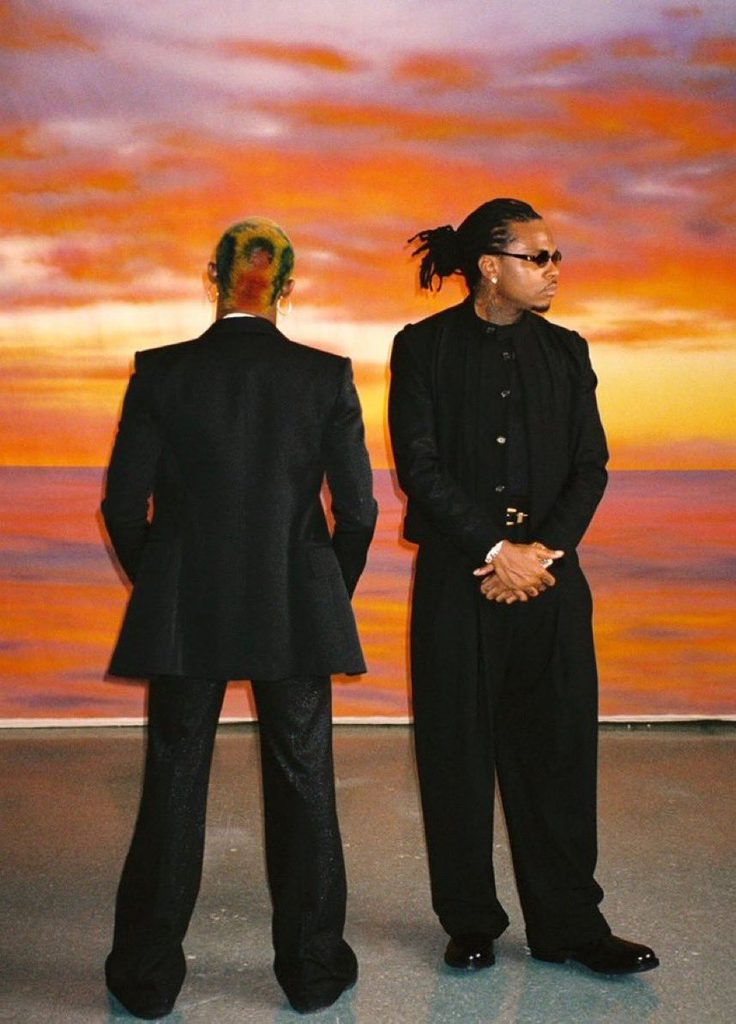
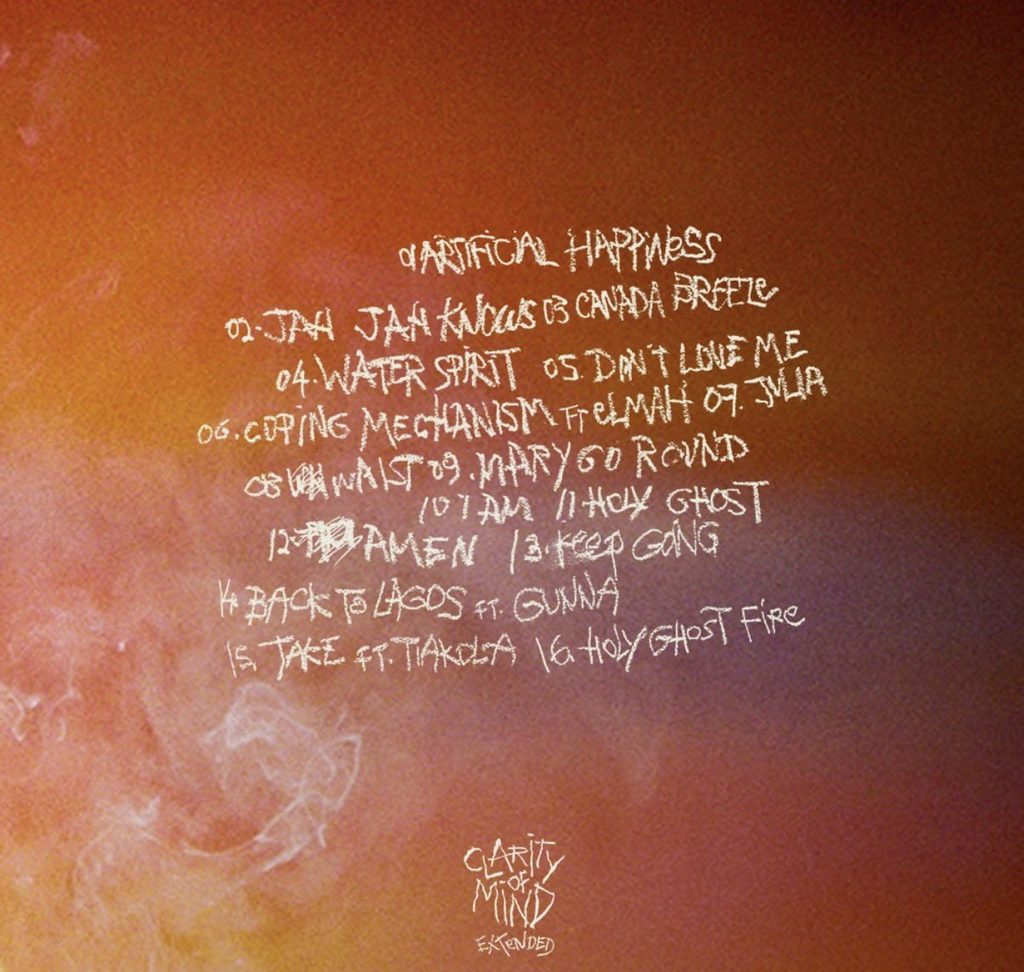
Six months after the original album arrived, Omah Lay returned with CLARITY OF MIND (EXTENDED) on October 29, 2026, expanding the tracklist from 12 to 16 songs. The additions are “KEEP GOING”, “BACK TO LAGOS” featuring Gunna, “TAKE” featuring Tiakola and “HOLY GHOST FIRE” featuring Lekaa Beats. Gunna and Tiakola introduce two different international audiences to the project, while Lekaa Beats’ involvement on the closing record brings another familiar creative collaborator into the fold.
“KEEP GOING” extends the album’s recurring conversation about perseverance and self-belief. It feels like a natural continuation of the introspective material, although its placement after “AMEN” raises an interesting question about whether the original album’s conclusion needed to be reopened. “BACK TO LAGOS” is perhaps the most intriguing addition from a collaborative standpoint. Gunna’s appearance presents an opportunity to bring two distinct musical sensibilities together, while the song’s title suggests a return to the place that has shaped Omah Lay’s identity despite his growing international ambitions. It is a welcome pairing, even if the collaboration’s significance arguably extends beyond the amount of space it occupies on the record.
“TAKE” introduces Tiakola, whose melodic approach provides another interesting meeting point for the project. The collaboration broadens the album’s international character without taking it too far from its established Afro-fusion foundation. Finally, “HOLY GHOST FIRE”, featuring Lekaa Beats, revisits the spiritual language that has become one of the project’s defining characteristics. Its placement at the end reinforces the album’s preoccupation with faith, devotion and personal transformation.
The additional material is welcome, and the collaborations make commercial and creative sense. However, the extended version also exposes a problem that has become increasingly difficult to ignore in Omah Lay’s approach to his music.
For an artist who repeatedly creates such distinctive musical worlds, the experience surrounding those worlds often feels surprisingly underdeveloped.
To be fair, it would be inaccurate to suggest that Omah Lay did absolutely nothing to bring fans into the world of CLARITY OF MIND. Before the original release, he hosted intimate listening experiences across London, Amsterdam, Berlin and Lagos. These included conversations, Q&As, matching tattoos and other activities designed to reconnect him with his audience after his period away from the spotlight. He also released several music videos, including those for “ARTIFICIAL HAPPINESS”, “DON’T LOVE ME”, “CANADA BREEZE”, “WAIST” and “HOLY GHOST”.

But that is precisely where the distinction lies. An album rollout and an immersive album experience are not necessarily the same thing. The listening parties were meaningful opportunities for fans to reconnect with the artist, and the music videos offered visual interpretations of individual records. What remains less convincing is the larger creative world connecting these different expressions. Beyond the music, there is little sustained narrative or visual language that allows the album’s central ideas to develop into a more complete experience, particularly as the album cycle progresses.
And this is not an argument for simply giving fans more content to consume. More music videos, merchandise, listening parties or social media activations do not automatically make an album experience more meaningful. The question is whether these elements are being used to communicate a cohesive artistic vision.
A masterpiece is not defined solely by the freedom it gives its audience to interpret it. That is only half the story. Great works of art also possess an internal understanding of what they want to communicate, the emotions they seek to evoke and the world they want their audience to inhabit. They take the listener through an intentional, considered experience, even when the final interpretation remains subjective. The artist does not have to dictate what everybody should feel, but the work should give them enough to feel something beyond the immediate pleasure of consuming it.
This is where Omah Lay’s approach becomes frustrating. His music consistently suggests an artist with an expansive imagination, one capable of creating distinct emotional and sonic identities. Yet, when it comes to translating that imagination into a more complete artistic experience, he often seems content to let the music do all the work. The listener gets the records, perhaps a few accompanying visuals, and is left to construct the rest.
It is particularly interesting when considered against the artist’s own explanation of his creative process. In his interview with The FADER, Omah Lay admitted that he gets bored easily and likes to move quickly, even revealing that he was already in a different creative headspace before CLARITY OF MIND had been released. This may explain some of the disconnect. He appears more interested in the next creative possibility than in exhausting the possibilities of the work he has already created.
There is nothing inherently wrong with that instinct. Artists should be allowed to evolve, experiment and move on from their previous work. But there is also something to be said about recognising when a body of work deserves more attention than simply releasing it into the world and moving on.
Consider what CLARITY OF MIND offers. Its spiritual references, the contradictions between faith and indulgence, its exploration of self-acceptance, and the recurring tension between fame and personal fulfilment provide enough material for an expansive creative direction. There are opportunities to explore these themes through visual storytelling, short films, carefully constructed performances, photography, creative installations and even more intentional audience participation. The album could have been an entire world that listeners were invited to enter, rather than a collection of excellent records accompanied by occasional visual interpretations.
Perhaps the most frustrating thing about CLARITY OF MIND is that the opportunity was already there. Omah Lay had spent years building anticipation, navigating a complicated creative setback and eventually returning with an album that demonstrated considerable growth. Its extended edition offered another opportunity to revisit the project, introduce new collaborators and deepen its existing ideas. Yet, much of the conversation surrounding the expanded release remains centred on…little.
Ultimately, Omah Lay remains one of the most compelling musical minds of his generation. CLARITY OF MIND is proof that his artistry is still evolving, that his production instincts remain sharp and that his ability to turn deeply personal experiences into accessible music is largely unmatched. But there is a difference between creating an exceptional body of work and fully exploring everything it makes possible.
Omah Lay has repeatedly demonstrated the genius required to make remarkable music. What remains to be seen is how far he is willing to take the creative possibilities of that genius.
RATING: 8/10