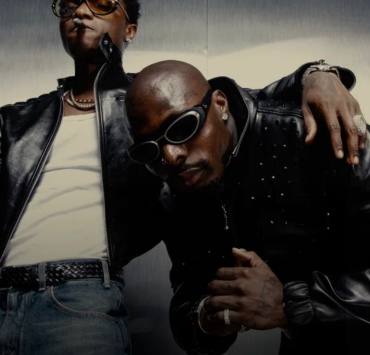
Rema, Abefe, Fameye, Kaestyle, Bien, Maxter B and More on New Music Friday


Another Friday, another fresh batch of sounds competing for space on our playlists. This week’s New Music Friday brings together an interesting mix of established names and emerging voices, with Rema, Fameye, Bien, Kaestyle, Abefe and Maxter B among the artists making new releases. From familiar sounds to fresh creative directions, there’s plenty to explore across the latest releases from Nigeria, Ghana, Kenya and beyond. As always, we’ve rounded up the new music worth catching up on this week, giving you a closer look at the songs setting the tone for the weekend.
REMA — EMB (EP)

Almost a decade into his career, Rema remains one of Afrobeats’ more difficult artists to pin down. From the alternative pop sensibilities of his 2019 self-titled debut EP to the global ambitions of ‘Rave & Roses’ and the abrasive, high-energy experimentation of ‘HEIS’, the Benin-born singer has consistently treated reinvention as an important part of his musical identity. On ‘E-Mortal Boy’, abbreviated as EMB, he returns to the EP format for the first time since 2023’s ‘Ravage’, assembling seven tracks that revisit some of his established influences while reaching further into sounds from across the Black diaspora.
Released on November 20, 2026, through Mavin Global Holdings and Jonzing World Entertainment, the 22-minute project arrives with considerable anticipation, particularly following the reception of its advance singles, ‘TEA’ and ‘Oh No’. There is also a headline collaboration that has understandably dominated conversations around the release: ‘Feel Alright’, which brings Rema and Wizkid together for their first official joint record. Yet, beyond the star power attached to its opening track, EMB is an opportunity for Rema to demonstrate just how comfortably he can move between musical worlds without surrendering the peculiar instincts that make his music recognisable.
The opening collaboration is an obvious talking point, but ‘Feel Alright’ is interesting for reasons beyond the novelty of hearing both artists on the same record. Built around a smooth, R&B-influenced arrangement, the song allows Wizkid and Rema to lean into their more affectionate, melodic instincts. Their vocal approaches complement each other without either having to dramatically alter their usual delivery. It is a meeting of two different generations of Afrobeats stardom, and one that feels surprisingly natural. Elsewhere, ‘Velvet’ offers one of the project’s more intriguing departures, marrying rumba-inspired percussion with slick guitar arrangements as Rema delivers a romantic account of devotion. There is a certain warmth to the record that makes it an interesting counterpoint to the more restless production choices elsewhere on the EP.
The genre-hopping becomes even more apparent as the project progresses. ‘TANZANIA’, featuring American producer BNYX, draws on Bollywood soundtrack influences, giving Rema room to revisit the unconventional vocal inflections and melodic patterns that characterised some of his earliest releases. ‘TEA’, meanwhile, remains one of the project’s more immediately infectious records, bringing together dancehall rhythms, glossy pop and techno elements in a combination that feels particularly suited to Rema’s playful delivery. On ‘Oh No’, produced by Rvssian, the singer takes a more restrained approach, floating over delicate, percussion-led production as he navigates the uncertainty of a romantic relationship. The contrast between these records demonstrates how comfortably Rema moves between different musical textures without losing his distinctive vocal personality.
Perhaps the project’s most unexpected turn comes with ‘SUGA’, where French-Congolese singer Theodora joins Rema over a grunge-adjacent production. It is a considerably rougher affair, with Rema abandoning some of his more familiar melodic restraint for a raucous delivery that matches the record’s alternative leanings. The closing ‘Bang Bang’, featuring Nigerian-American dance music star Kah-Lo and longtime collaborator London, brings another shift in energy, rounding off the project with a more electronically inclined approach. Across these records, London’s extensive production involvement helps provide some connective tissue, even as the individual songs venture into different musical territories.
At just over 22 minutes, ‘E-Mortal Boy’ is a relatively brief but ambitious collection. Its biggest strength is Rema’s willingness to remain musically curious, drawing from rumba, dancehall, R&B, electronic music and alternative rock without making the exercise feel like an attempt to chase every available trend. There are moments when the sheer variety threatens to pull the project in several directions, but that restlessness has also become an essential part of his appeal. Following the more aggressive sonic identity of ‘HEIS’, EMB offers a different kind of statement: one that is less concerned with maintaining a singular sound and more interested in exploring how many different musical worlds Rema can inhabit. The result is an engaging addition to his catalogue and another reminder that his most interesting quality might be his refusal to settle into one musical identity.
Maxter B — Worry Dem With Vibes (WDWV) (Album)

Nigerian singer and songwriter Maxter B has officially released his new album, Worry Dem With Vibes (WDWV), a 12-track project that explores love, ambition, personal experiences and the freedom to express oneself without limitations. Released on November 20, 2026, the album brings together a collection of records that reflect his evolving musical identity, combining the energy of contemporary Afrobeats with melodic songwriting and relatable themes.
There is a certain attitude that comes with the title Worry Dem With Vibes. Beyond its playful expression, it captures a mindset built around confidence, individuality and the determination to keep moving regardless of external expectations. For Maxter B, that outlook finds its way into the music, where moments of celebration sit alongside romantic interests and more reflective expressions.
The project unfolds across different moods, allowing the singer to explore various aspects of his sound without restricting himself to one musical direction. From the opening “Intro” to the closing record “Salute,” the album presents a combination of rhythmic compositions, melodies and personal storytelling that reflects the range of his creative interests.
At the centre of the project is “Desire,” the album’s lead track, which brings Maxter B’s melodic sensibilities into focus through its romantic direction. The record is complemented by songs such as “Love Interlude,” “Spicy” and “Tasty,” each contributing to the album’s exploration of attraction, affection and emotional connection. Meanwhile, “Blessed Worry Dem” and “Wowo (Jo Mi Jo)” offer contrasting expressions within the wider collection.
Listeners familiar with Maxter B’s recent releases will also recognise “Stuntin,” featuring JUJUTHECHARM, and “Lavida,” two records that previously introduced different elements of his artistry. Their inclusion on WDWV places those earlier releases within a more complete musical narrative, connecting his recent output with the direction of the new album.
Another notable moment comes through “God Abeg,” featuring Jaywillz. The collaboration adds a second vocal presence to the project and highlights Maxter B’s willingness to incorporate other creative voices into his work.
While much of Worry Dem With Vibes centres on accessible melodies and rhythmic expression, the project also makes room for less structured moments. “Out Here (Freestyle)” introduces a different approach to delivery, contributing to an album that seeks to balance spontaneity with more deliberate songwriting.
For Maxter B, the release represents an opportunity to present a fuller picture of his artistry. Rather than defining his sound through individual singles alone, WDWV brings together various musical ideas and experiences within one project, offering listeners a more comprehensive introduction to his creative direction.
As Afrobeats continues to expand through different sounds, influences and emerging voices, Maxter B adds his perspective with a project rooted in self-belief, romantic expression and the simple enjoyment of music. Worry Dem With Vibes reflects that spirit, presenting a collection of songs intended to connect with listeners across different moods and moments.
Fameye, Joey B, Sarkodie & AratheJay – ‘GEN Z II’
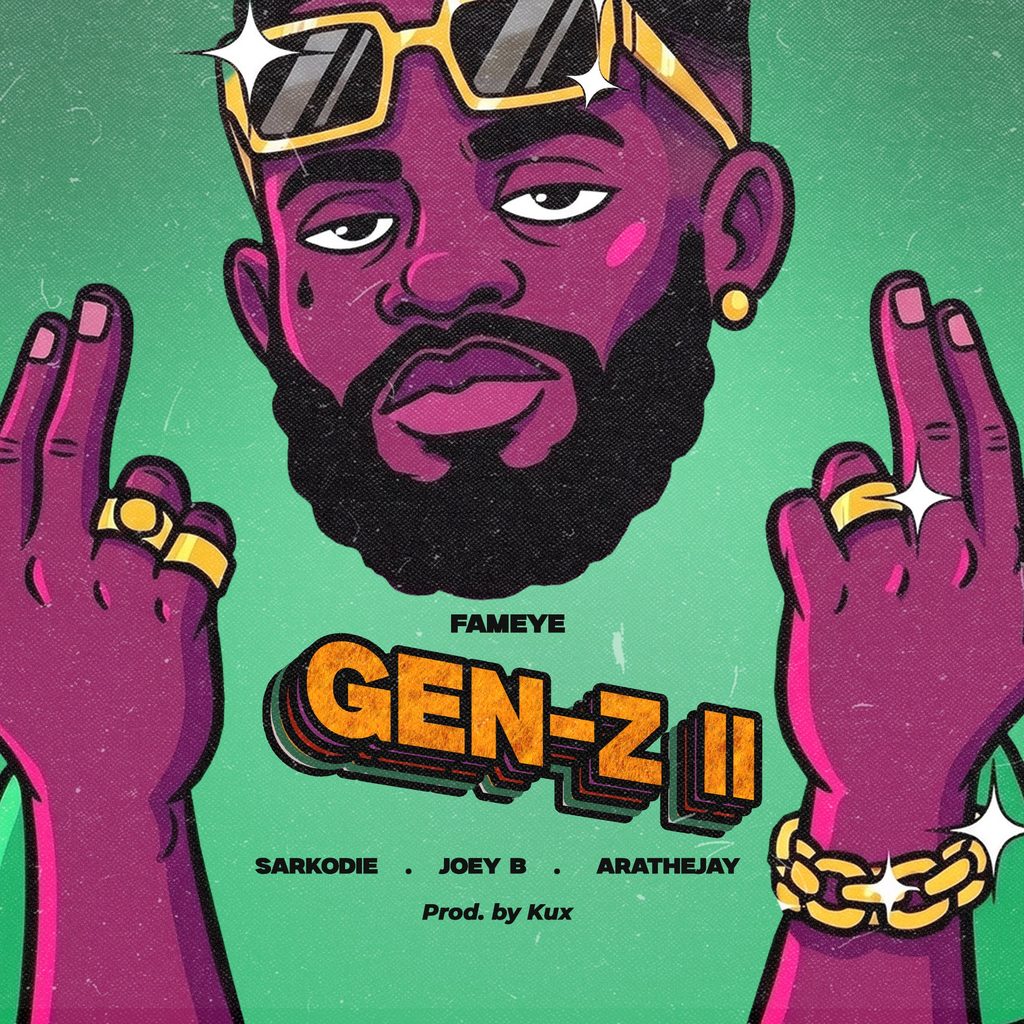
There is a particular kind of pressure that comes with being young and trying to make something of yourself. The expectation to earn, the temptation to spend, the desire to enjoy life while it is still yours to enjoy, and the quiet anxiety of wondering whether everything will eventually work out. Fameye’s ‘GEN Z II’ takes that familiar tension and turns it into a prayer, bringing Joey B, Sarkodie and AratheJay along for a conversation that feels as much about survival as it does about youthful ambition.
First, a clarification on the title: the new release is officially listed as ‘GEN Z II’, a follow-up to Fameye’s solo ‘Gen Z’, released in July. This sequel arrived on November 12, with production by Kux.
The song’s most interesting decision is that it does not treat Gen Z as a generation interested only in enjoyment. There is plenty of that here: the appetite for luxury, money, nightlife, pretty girls and the freedom to live well. But Fameye is equally interested in what sits underneath those desires. The pressure to make money, the fear of going backwards, the uncertainty of the hustle and the need for divine intervention all find their way into the writing. The recurring prayer, “Oh Lord please don’t you leave me alone,” gives the record an emotional centre that stops its celebration of youthful living from becoming entirely superficial.
The chant that runs through the record, “Achi chukuchuku achiku,” is another important piece of the arrangement. It gives the song a communal, almost call-and-response quality, making the hook easy to latch onto while giving the verses room to move between reflection and playfulness. The production, handled by Kux, is described as an Afrobeats-influenced instrumental with Ghanaian hip-hop rhythms. It provides a lively framework for four artists whose approaches to melody and rap offer enough contrast to keep the collaboration interesting.
Fameye remains the natural anchor. The original ‘Gen Z’ was his record, and this sequel retains the personal, prayerful storytelling that gives his music much of its appeal. The guest list, however, makes the conversation considerably wider. Sarkodie brings the perspective of an established rapper who understands the demands and contradictions of the hustle. Joey B adds another generational viewpoint, even playfully acknowledging that he is not Gen Z while insisting he understands the struggles. AratheJay brings a younger voice into the mix, helping the record bridge different stages of Ghana’s music scene. The collaboration works because the title becomes a meeting point for different experiences rather than a claim that everybody on the song belongs to the same generation.
There is also something quite amusing about the record’s central contradiction. Everybody wants the good life, but everybody is praying not to be abandoned on the way there. The desire for luxury sits beside anxiety about money running out; the enjoyment of the streets sits beside the plea to be delivered from them. That tension gives ‘GEN Z II’ more personality than a straightforward anthem about being young, having fun and making money. It understands that for many young people, enjoyment and survival are happening at the same time.
Still, the song’s biggest strength is also where it could have pushed further. Its subject is broad enough to accommodate sharper observations about the particular economic and social realities facing young Ghanaians. There are glimpses of that in the references to financial pressure, public transport, debt and the uncertainty of making a living, but the record often returns to familiar aspirations and prayers. With four established voices in the room, there was room to make the generational commentary even more pointed. The song is more compelling as a relatable, communal expression of pressure than as a particularly incisive portrait of Gen Z.
Ultimately, ‘GEN Z II’ understands the appeal of its predecessor and gives the idea a bigger room to breathe. Fameye has turned a personal record into a gathering of voices, bringing together different eras of Ghanaian music without losing the prayer at the heart of the original concept. It is catchy, relatable and built around a hook that should travel well beyond its first audience. More importantly, beneath all the talk of money and enjoyment is a familiar request from a generation trying to figure things out: let the hustle amount to something, and please, let us make it through.
Kaestyle, OdumoduBlvck — ‘Paloma’
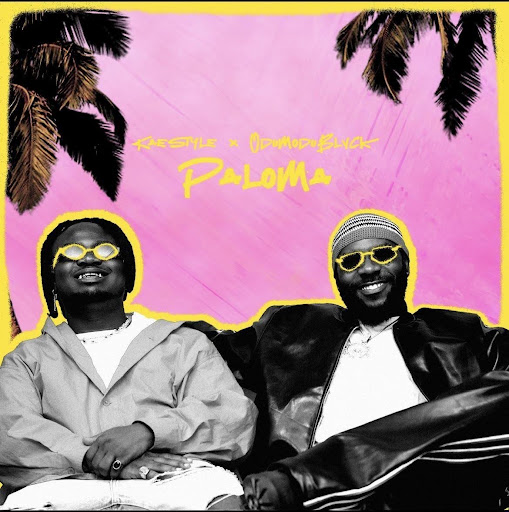
Kaestyle joins forces with OdumoduBlvck on ‘Paloma’, a playful Afrobeats record that brings together two distinct musical personalities over a highlife-inspired sound. Driven by infectious melodies, cheeky lyrics and an easy-going rhythm, the collaboration finds both artists exploring the excitement of romantic attraction with plenty of character.
On ‘Paloma’, Kaestyle leans into the lighter, more playful side of his artistry, delivering a catchy performance built around his melodic instincts. OdumoduBlvck brings his unmistakable personality to the record, adding an energetic verse that gives the song another dimension. Their chemistry makes for an entertaining collaboration, with both artists finding their footing within the song’s lively production.
The record also draws from the rich musical traditions that continue to shape contemporary Nigerian pop. Its highlife influences give ‘Paloma’ a familiar warmth, while its Afrobeats foundation keeps the sound firmly rooted in today’s musical landscape.
For Kaestyle, the release continues a run of music that highlights his versatility and growing identity as an artist. Following the release of his album STYLISH, ‘Paloma’ offers another glimpse into his ability to move across different sounds while maintaining the melodic sensibility that has become central to his music.
BIEN — ALUSA CONTINUA (ALBUM)

For Bien-Aimé Baraza, the story is far from over. Having spent more than a decade establishing himself as one of East Africa’s most recognisable musical voices as a member of Sauti Sol, the Kenyan singer has gradually built an equally compelling identity as a solo artist. His 2023 debut solo album, ‘Alusa Why Are You Topless?’, introduced a more individual expression of his songwriting and musical interests. Now, on his sophomore album, ‘Alusa Continua’, Bien turns his attention towards something considerably bigger: a celebration of Kenyan musical heritage, the creative relationships shaping East African music and the possibilities of taking those sounds to a wider international audience.

Released on November 20, 2026, through Quality Control Music, the 17-track, 50-minute album is an ambitious collection that brings together musicians from Kenya, Nigeria, Tanzania, Uganda and the United States. Its title is a clever play on Bien’s middle name, Alusa, and the Portuguese expression A luta continua, meaning ‘the struggle continues’. It is an appropriate statement for an artist whose journey has moved from the heights of Sauti Sol’s success to the challenge of establishing himself independently. More importantly, the album’s extensive guest list suggests that Bien is interested in telling a story that extends beyond his own musical journey.
One of the project’s most interesting qualities is its relationship with traditional Kenyan sounds. Rather than treating cultural influences as occasional embellishments, Bien makes them an important part of the album’s musical foundation. The opening stretch establishes this quite nicely. Following the brief title introduction, ‘All My Enemies Are Suffering’ sets a celebratory tone with its soaring choral hook and triumphant disposition. ‘Signs’, featuring Atlanta rapper 2 Chainz and Kenyan rapper Pape Gen Z, follows with a heavier, bass-driven arrangement, bringing together different rap sensibilities without losing the album’s Afropop foundation. It is an interesting international pairing, particularly because Pape Gen Z’s presence ensures that the record retains a connection to the local scene even with an established American rapper on board.
‘Kaumbete’ is another important moment in the album’s exploration of Kenyan musical heritage. Featuring Coster Ojwang, the record draws from the guitar-led traditions of benga and ohangla, pairing their melodic character with the heavier low-end rhythms associated with contemporary amapiano. The result is a meeting of musical generations that feels particularly relevant to the album’s wider intentions. Elsewhere, ‘Don’t Go’ brings Ugandan singer Joshua Baraka and The Compozers into the fold, while ‘How Can I Forget’ sees Nigerian vocalist Oxlade join Bien on a softer, midtempo Afrobeats record. Oxlade’s expressive vocal style makes him a particularly fitting collaborator for Bien, whose own songwriting often gravitates towards romance, vulnerability and emotional reflection.
The album also makes room for some of the records that have helped establish its anticipation. ‘Finale’, Bien’s collaboration with Tanzanian star Alikiba, arrived earlier in the year and has become one of the project’s biggest records ahead of its release. Built around a buoyant, konpa-inspired rhythm, the song brings together the two East African singers in a celebratory exchange that has travelled well beyond their respective home markets. Its reported success, including tens of millions of YouTube views, makes its inclusion a natural choice. ‘I’ll Be Okay’, another pre-release single, offers a more personal expression of optimism, while ‘XOXO’ strips things back considerably, allowing Bien’s rich vocals to take centre stage over an acoustic soul arrangement.
Beyond the more familiar collaborations, the latter stretch of the album continues to expand its cultural reach. ‘P.O. Box Kakamega’, featuring Bryce One, and ‘Mayolo’, which brings together Kenyan rapper Femi One and Papaa Maasai, further reinforce Bien’s interest in incorporating local voices into a project with international ambitions. ‘Mueni’ features KayCyy, adding another cross-continental connection, while ‘Success’ brings together Tulwap Kipsigis and Nono Melodies. The closing ‘Ah’ is particularly significant. Rather than ending with another star-studded collaboration, Bien closes the album with a heartfelt appeal for Pan-African unity, giving the collection a more reflective conclusion.
There is an interesting distinction between ‘Alusa Continua’ and the usual approach to international collaborations. With appearances from 2 Chainz, Oxlade, Joshua Baraka, Alikiba and KayCyy, the album certainly has enough recognisable names to attract listeners across different markets. However, its more meaningful achievement is the attention it gives to Kenyan musicians and the sounds that inform Bien’s artistic identity. Coster Ojwang, Femi One, Papaa Maasai and the other regional contributors are not simply filling out a guest list. They are part of the cultural conversation that makes the album distinctive.
Ultimately, ‘Alusa Continua’ is a worthwhile statement from an artist who appears increasingly conscious of the cultural responsibility that comes with his platform. Its 17 tracks occasionally make for a sprawling listening experience, and the number of collaborations means Bien sometimes has to share the spotlight on his own album. Still, the project’s ambition is difficult to overlook. By bringing together traditional Kenyan sounds, contemporary Afropop, amapiano, R&B and influences from across the continent, he presents an expansive picture of what East African music can sound like when its creative communities work together. For an artist who has already enjoyed considerable success with Sauti Sol, ‘Alusa Continua’ feels like another attempt to establish a legacy on his own terms, while making sure the music and people around him are part of the journey.
ABEFE — INDUSTRY CHEF (EP)

For an artist whose rise has been closely tied to the internet, Abefe’s next challenge is turning attention into a catalogue that can hold its own beyond the momentum of a viral moment. The Nigerian singer, born Agboola Emmanuel Itunu, arrives with Industry Chef, a six-track EP released on November 19, 2026, and his second project of the year. The title leans into the nickname that has become part of his identity, while the music gives him another opportunity to build on the audience he has gathered through records like “Achalugo”, “Orekelewa” and “Romeo and Juliet”. It is a relatively compact offering, with just two guest appearances, suggesting that Abefe is more interested in establishing his own musical personality than crowding the project with star power.
There is a little more context to that challenge. Abefe’s breakthrough came through his contribution to Amma’s “I Love You” open-verse challenge on TikTok, followed by covers that helped introduce his voice to a much wider audience. What made the early attention stick was his ability to communicate romantic vulnerability with a youthful, unforced delivery. His July debut, Abefe (Begged To Be Loved), leaned heavily into that territory, exploring admiration, heartbreak, regret and the desire for another chance. His music is heavily influenced by his Yoruba upbringing and the different sounds he grew up listening to, including Fuji and Apala.
‘Industry Chef’ keeps the guest list deliberately short. Wizard Chan appears on “Mofeku”, while Muyeez joins him on “Ire”. Both are interesting choices, particularly Wizard Chan, whose alternative reggae-leaning approach offers a different musical temperament from Abefe’s familiar Afropop and Afro-fusion lane. Muyeez, meanwhile, is a more natural fit within the contemporary Nigerian street-pop ecosystem. The other four records, “Oluwewe”, “You And I”, “Ayebo” and “Money”, are left to Abefe alone. It is a sensible arrangement for an artist still establishing his identity: the features add colour without taking over the project.
There is also a notable spread of production credits. NAHZ RASHID handles “Oluwewe”, “Mofeku” and “You And I”, while JOSTOPAC produces “Ire”. SAWN TEMPLE takes “Ayebo”, and GENEKAY SIMBA closes the project with “Money”. That distribution gives the EP contributions from four producers across its six songs, although the available credits alone cannot tell us how distinct their individual approaches sound or how successfully the sequencing brings them together. At approximately 15 minutes, the project is brief enough to leave little room for unnecessary detours.
The more interesting question is what Industry Chef adds to the Abefe story. A second EP arriving just four months after a debut that reportedly crossed 15 million streams is an opportunity to demonstrate that the early momentum has substance behind it. But speed and consistency are not the same as artistic progression. The title makes for a memorable piece of branding, and the collaborations give the project a little range, but Abefe’s next big step will be showing how much further his songwriting, vocal character and musical choices can stretch beyond the romantic themes that first endeared him to listeners.
For now, ‘Industry Chef’ is a concise continuation of a promising year. It keeps Abefe visible, gives his growing audience six more records to spend time with, and introduces a couple of interesting collaborators into his world. The real test is whether the next project finds him taking bigger creative risks. The attention is already there; the catalogue has to keep earning it.
LISTEN TO THE FULL NEW MUSIC FRIDAY PLAYLIST BELOW