Tems Has Never Called Herself an Afrobeats Artist.

In an industry that has become increasingly comfortable putting the word “Afrobeats” on almost anything that comes out of Africa, Tems has spent years asking for a little more precision.
The clip currently making the rounds online is not new. In an October 2023 appearance on Ebro in the Morning, Tems was asked whether she considered herself an Afrobeats artist.
She didn’t.
Tems described her music as alternative, or “alté, as they would say,” and elsewhere in the conversation referred to it as “alternative afro soul R&B.” She also pointed out something that has become increasingly obvious as African music has travelled further around the world; music coming out of Nigeria is often automatically labelled Afrobeats simply because it comes from Nigeria.
Her point was that the Afrobeats label does not describe everything.
Tems Says She Is Not an Afrobeats Artist

In a 2021 interview with Billboard, Tems was even more direct.
“I’m not afrobeats. That’s the truth,” she said.
At the time, she explained that people often attached the label to her because she was African. She acknowledged that she could feature on an Afrobeats record without that automatically making her an Afrobeats artist.
It was a distinction worth making then, and it is arguably even more important now.
Because Tems’ career has become one of the clearest examples of how difficult it is for an African artist to exist outside the continent’s most commercially recognisable genre label.
The problem is that “Afrobeats” has become useful shorthand.
For international audiences, it makes African pop easier to understand. For streaming platforms, festivals, award shows and publications, it provides a convenient category. It has helped Nigerian music travel from Lagos to London, New York and everywhere in between.
Nonetheless, convenience has its limits.
At some point, Afrobeats stops describing a particular sound and starts describing a continent.
Why Tems’ “Essence” Feature Complicated the Afrobeats Debate
Of course, Tems’ argument becomes more complicated because one of the songs that introduced her to the world was “Essence.”
Wizkid’s 2020 hit, on which Tems appeared alongside the Nigerian superstar, became one of the defining African pop records of the decade. Its remix with Justin Bieber pushed it even further into the global mainstream, eventually reaching the top 10 of the Billboard Hot 100.
It is also, unsurprisingly, frequently described as Afrobeats.
Tems herself was less interested in putting it in that box.
In that 2021 Billboard interview, she described “Essence” as afrofusion and questioned whether it was necessarily Afrobeats.
A song can exist in the Afrobeats ecosystem without making every artist involved an Afrobeats artist.
Tems’ Music Is Bigger Than One Genre
Listen back to Tems’ catalogue and her resistance to the label becomes easier to understand.
“Mr Rebel” and “Try Me” announced an artist far more interested in atmosphere, vulnerability and introspection than in fitting neatly into the dominant Nigerian pop template.
For Broken Ears pushed that further. “Free Mind” became one of her biggest records and eventually spent 17 weeks at No. 1 on Billboard’s R&B/Hip-Hop Airplay chart.
Then came Born in the Wild, a project that moves between R&B, soul, Afrobeats, gospel influences and other African sounds without seeming particularly interested in announcing where one category ends and another begins.
“Love Me JeJe” is a particularly good example.
The song borrows from Seyi Sodimu’s 1997 Nigerian classic while remaining unmistakably Tems. “Get It Right” brings Asake into the picture. Elsewhere, she leans into the intimacy that has always been central to her music.
There are African influences everywhere.
There is also R&B.
There is soul.
There is alternative music.
There is Tems.
The mistake is assuming those things have to cancel one another out.
Why Tems Chose an Alternative Sound Instead of Following Afrobeats
Tems’ resistance to Afrobeats is not simply a recent branding decision.
In a 2023 conversation with Interview Magazine, she spoke to Kendrick Lamar about her early experiences trying to make music in Nigeria.
At the time, she said many producers around her were working within what she described as “just Afrobeats, the main genre of Nigeria.”
Again, she was not dismissing the genre.
Her frustration was that it was being treated as the only viable route.
She wanted to make something that felt different. She wanted the emotional scale she heard in artists such as Celine Dion. Yet the message she kept receiving was essentially that if she wanted to succeed in Nigeria, she needed to make Afrobeats.
So she found another way.
Tems taught herself production.
That decision eventually became one of the foundations of the career we know today.
It is difficult, then, to interpret her comments as some sudden rejection of Afrobeats now that she has achieved global success. She was making the distinction long before “Essence,” “Wait For U” and Born in the Wild.
The Problem With Calling Every African Artist Afrobeats
This is where Tems’ argument becomes bigger than Tems.
There is nothing wrong with calling an artist Afrobeats when that is what they make.
The problem is assuming that African origin is itself a genre.
That logic would be strange anywhere else.
We do not call every American artist a hip-hop artist because they are American. We do not call every British musician a rock artist because they are British.
Yet African musicians are often placed inside one enormous musical bucket.
Tyla is a South African pop artist whose music is deeply connected to amapiano, yet conversations about African music can quickly drag her into the Afrobeats conversation.
Amaarae moves between alternative music, R&B, pop, rock and electronic sounds, but her Ghanaian identity can become more prominent in descriptions of her music than the music itself.
The problem is not Afrobeats’ popularity.

It is its usefulness becoming its limitation.
The genre became the language through which the world discovered African pop. Now the same language sometimes struggles to describe what African artists are actually doing.
Wizkid and Burna Boy Have Also Questioned the Afrobeats Label
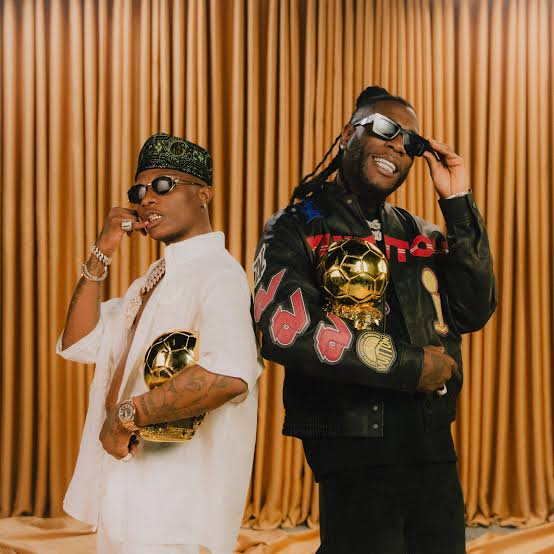
There is an interesting irony here.
Tems is hardly the only major African artist uncomfortable with the idea that Afrobeats should function as an umbrella term for everything.
Wizkid has criticised the tendency to describe all African music as Afrobeats, arguing that doing so would be similar to treating every American artist as a rapper.
Burna Boy has long described his own sound as Afrofusion.
Neither artist is denying the importance of Afrobeats. They are questioning the assumption that every African musical expression must eventually be filed under it.
The world is listening to more African artists than ever before.
It would be a shame if the vocabulary used to describe them remained stuck in one word.
Tems Is Asking Us to Be More Specific
There is a temptation to turn Tems’ comments into a headline; Tems says she isn’t Afrobeats.
That makes for a good social-media argument.
It is also missing the more interesting point.
Tems has never said that she has nothing to do with Afrobeats. She has collaborated with Afrobeats artists. She has appeared on Afrobeats records. Her music sometimes sits comfortably within the sound.
What she has consistently resisted is the idea that Afrobeats should be the final answer to the question of what she makes.
Afrobeats can be a Nigerian musical movement, a global industry, a sound, a commercial category and a cultural force without becoming the name for every African song that finds an international audience.
Tems does not need to escape Afrobeats.
She simply wants enough room to be something else when the music calls for it.
The easiest way to respect that is to stop arguing with the artist about what she calls herself.
Listen to the music.
Then call it what it sounds like.