Sanjo Lawal’s Art Gives “Heavy Is the Head” a Whole New Meaning

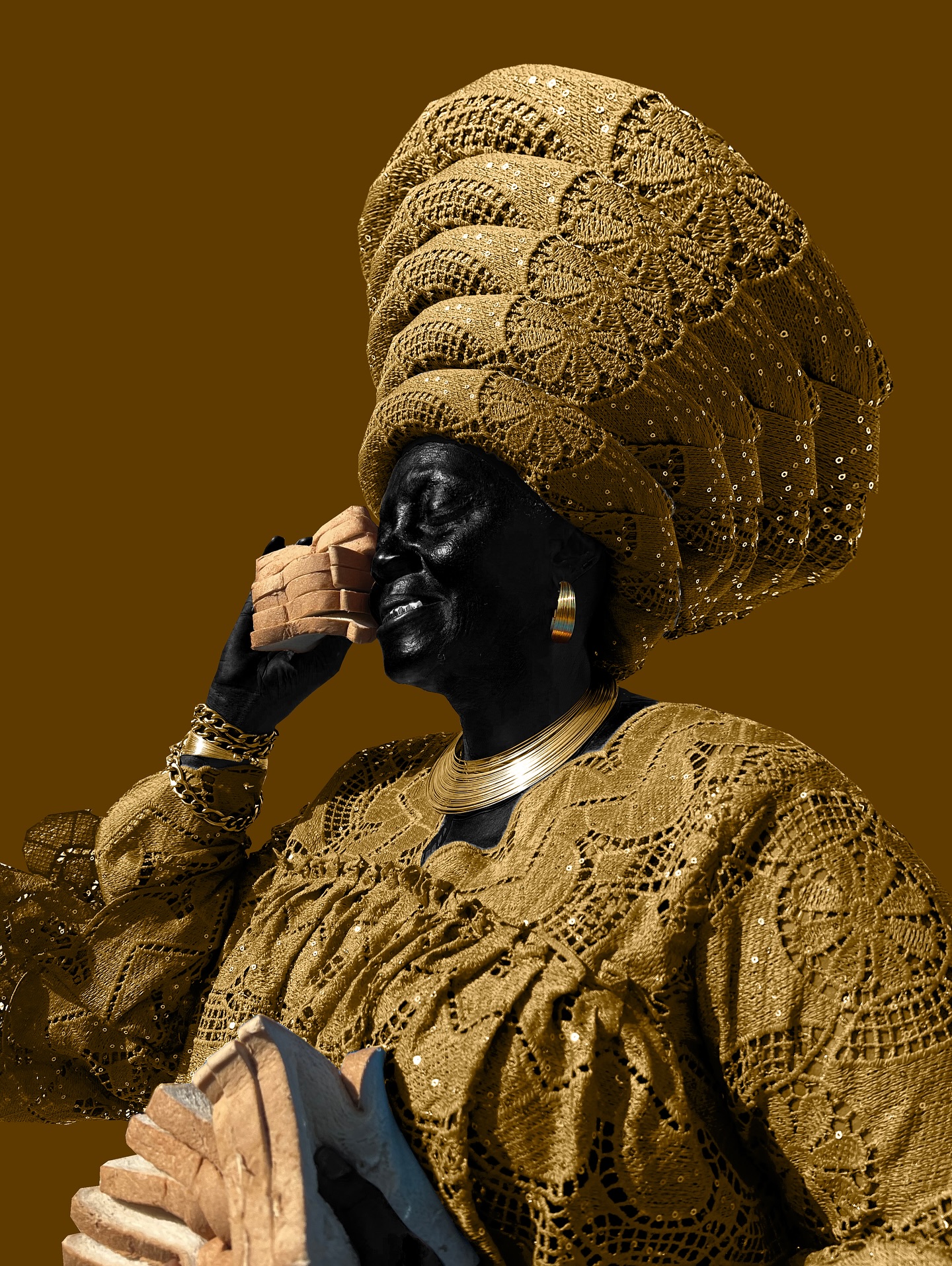
Sanjo Lawal’s photographs are of one kind.
The Lagos-based photographer and multidisciplinary artist builds highly stylised portraits around saturated colour, elaborate clothing, dramatic poses and figures who seem to exist somewhere between everyday life and fantasy. Fila and gele become oversized crowns, fabrics become visual statements, and familiar faces are transformed into something almost mythical. For Lawal, the answer has little to do with royalty and a lot to do with experience. His portraits are full of beauty, pride and spectacle, but also identity, survival, ambition and the things people carry while trying to build a life. The crown is simply where he begins.
Who Is Sanjo Lawal, the Nigerian Photographer and Artist?

Born in Lagos in 1997 and raised in Ijebu Ode, Ogun State, Sanjo Lawal studied visual and fine art at Yaba College of Technology. His practice began with drawing and painting before moving into documentary-style smartphone photography of everyday Lagos.
Over time, those photographs became increasingly constructed. Lawal now combines photography, digital editing, digital painting and mixed media to create the saturated portraits that have become central to his practice.
His work has appeared internationally, including at AKAA Art Fair in Paris, and in publications such as Vogue Italia, Rolling Stone Africa and Forbes Africa. In 2025, he presented his first international solo exhibition, Heavy Is the Head, at THIS IS NOT A WHITE CUBE in Lisbon.
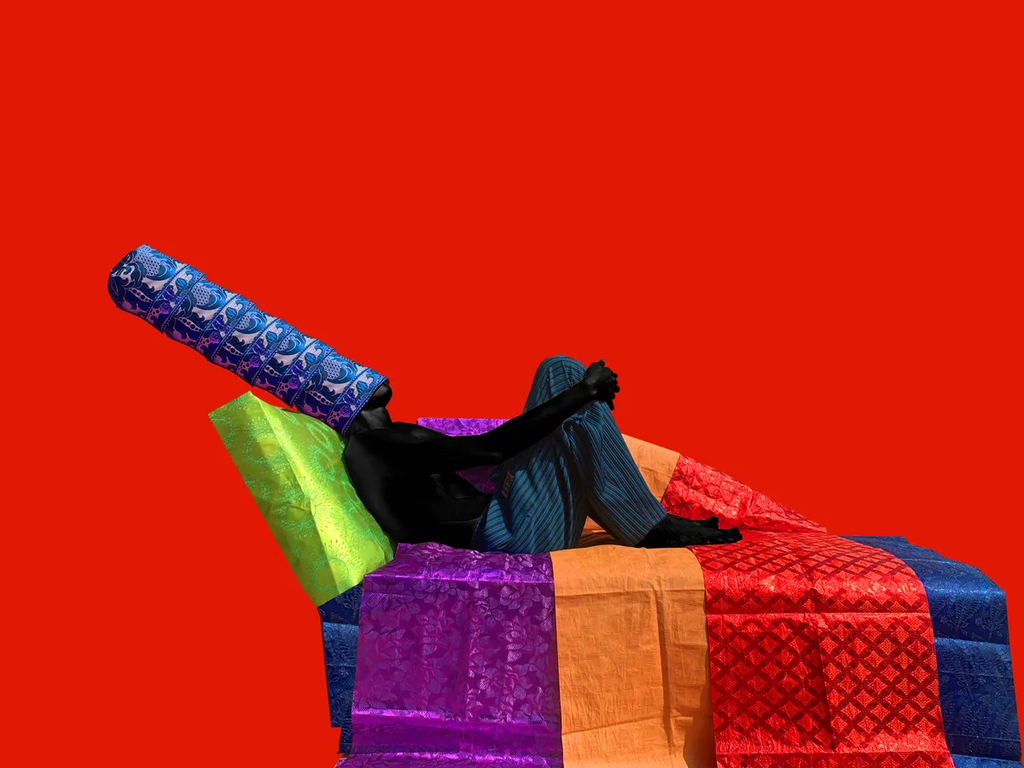
The Meaning Behind Sanjo Lawal’s Heavy Is the Head
The title Heavy Is the Head gives us a peek into what Lawal’s work is about.
His portraits are filled with people who look powerful. They are dressed carefully. They are surrounded by colour. Their poses are deliberate. Many wear elaborate headpieces that immediately command attention.
Lawal has described the fila and gele as “our crowns” and connects the idea of the head to ori, the Yoruba concept associated with consciousness and destiny.
But a crown also comes with weight.
That is where the work gets interesting.
Lawal’s portraits are beautiful, sometimes extravagantly so, but the people inside them are not presented as people without problems. His work repeatedly touches on experience, ambition, work, family, migration and the pressure of trying to make something out of your life.
In Heavy Is the Head That Chases the Bread II, for example, the crown becomes tied to the everyday pressure of survival and the pursuit of money.
The glamour is still there.
So is the grind.
Why Crowns and Headpieces Matter in Sanjo Lawal’s Art
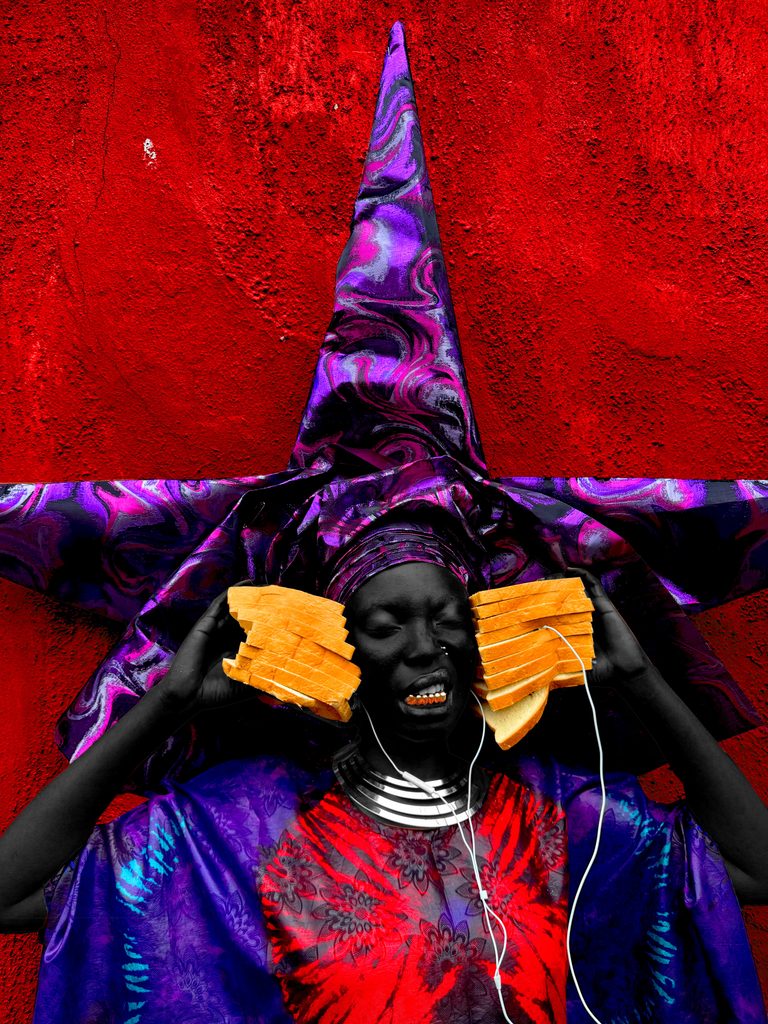
The headpieces are probably the first thing many people notice about Sanjo Lawal’s art.
They are difficult to miss.
But reducing them to decoration misses what Lawal is doing with them. His exaggerated gele and fila give his subjects an almost regal presence, while also making the viewer think about what sits underneath the crown.
That idea connects to Lawal’s wider interest in Nigerian culture and Yoruba heritage. He has spoken about being inspired by the crown of the Ooni of Ife, while his use of ceremonial clothing and fabrics draws from the world around him.
His work is therefore deeply rooted in Nigerian visual culture without looking like a straightforward documentation of it.
Everything is turned up.
The colours are louder, the clothes bigger, the poses theatrical, and ordinary people become larger-than-life characters.
How ‘Japa’ Appears in Sanjo Lawal’s Photography
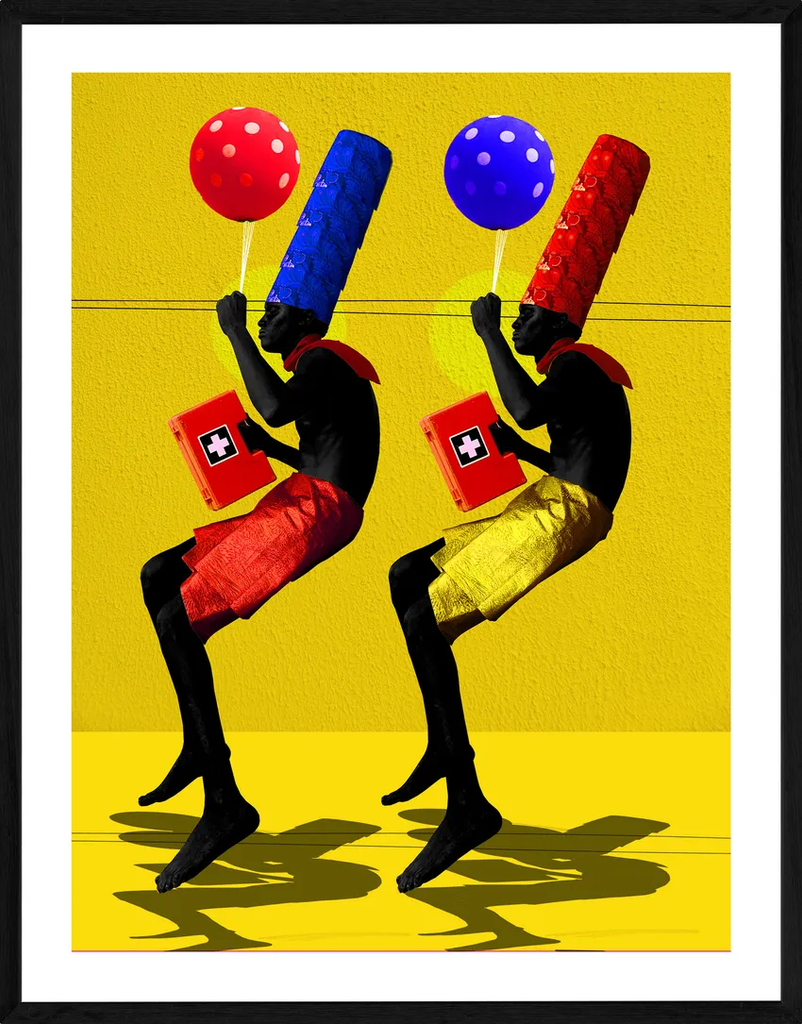
“Japa” has become one of the most recognisable words in contemporary Nigerian life, referring to the desire to leave the country in search of better opportunities.
Lawal is simultaneously making work about Nigerian pride, cultural inheritance and the importance of carrying African identity with you.
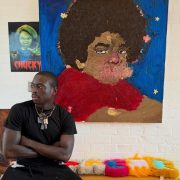
So what happens when the person wearing the crown is also thinking about leaving?
It is a question many Nigerians understand instinctively.
You can want to leave Nigeria and still love Nigeria.
You can be frustrated by the country and still care deeply about the things that made you.
You can get on a plane without deciding to leave everything behind.
That tension gives Lawal’s work some of its emotional weight.
Sanjo Lawal’s Vision of Nigerian Identity
What makes Sanjo Lawal’s photography compelling is the way it takes familiar things — people, fabrics, ceremonies, smartphones, family and everyday Nigerian life — and makes them feel monumental.
His process begins with photography, often captured on a phone, before the images are transformed through digital manipulation and painting. It is a surprisingly accessible starting point for work that eventually finds its way into international galleries and art fairs.
Lawal does not need his subjects to arrive already looking extraordinary.
His people may look like kings and queens but it is all a product of his artistic brilliance.