Meet Star Jay, the Quiet Architect Behind EF Moon’s Unruly Rise


A majority of consumers and observers of the Nigerian music scene must now be familiar with the newest militant act in the scene, EF Moon, and his unusually refreshing introduction, which has arrived as a jolt to a bubbling underground and taken much of its spotlight. Known for his gritty lyrics, a deeply emotive delivery, and equally raw visual expressions of his music in the form of content bites, EF Moon has been able to achieve all this through a yin-yang alliance with producer Star Jay.
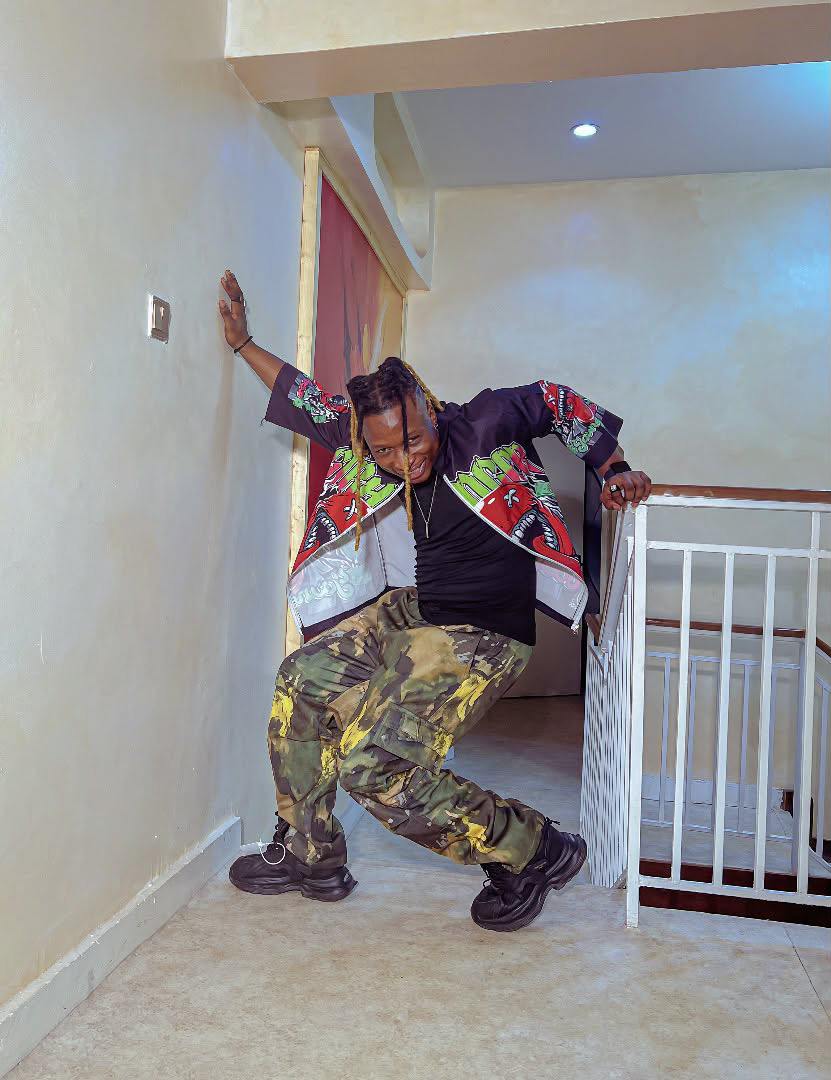
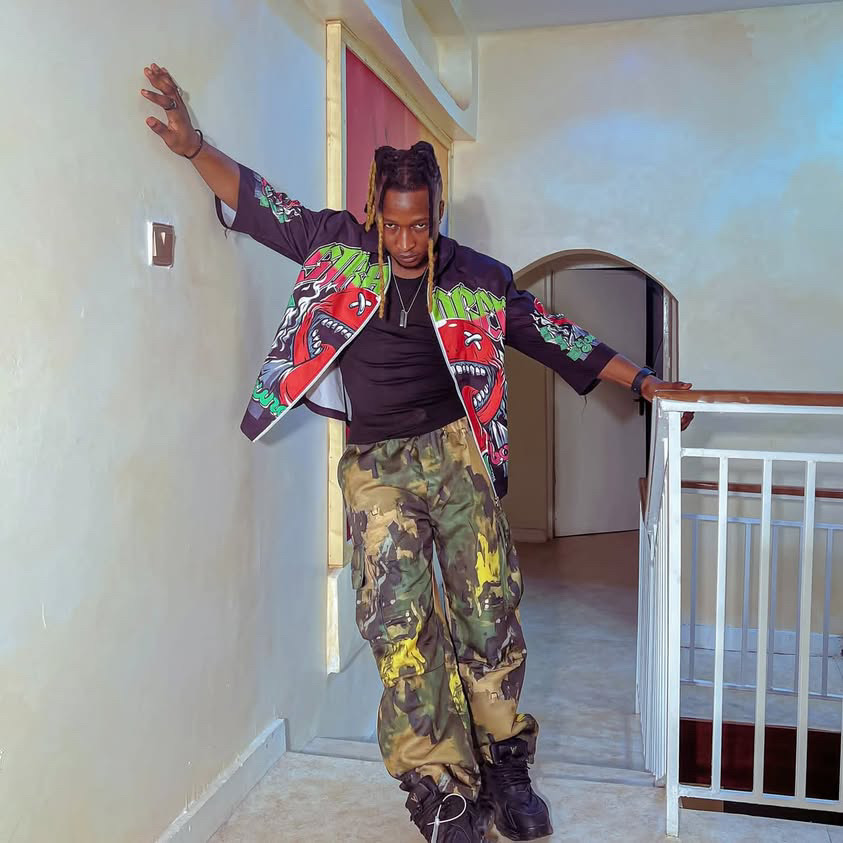
Often, a generation of music listeners is blessed with the phenomenal pairing of an agreeable producer-and-artist duo who rise from the tight cracks, form a symbiotic alliance, and alchemize a sonic awakening the scene hasn’t quite experienced in such variations. Evidently, the strange, compelling universe EF Moon inhabits does not exist by his authorship alone. Every duo has a quieter half—the one who builds the room the noise happens in and in this alliance, that architect is Star Jay (born Divine Akachukwu Agbai). Somewhere behind the distorted edges, the heavy drums and the restless basslines are the ingenious production of Star Jay, whose creative language has become increasingly inseparable from the artist it helps bring to life. He sits behind the console, obsessing over a snare bounce nobody else will consciously notice, choosing again and again not to be the loudest thing in the room he built. This is his story, told in his own words across two sit-downs.
You’ve had several names, but Star Jay is the one that’s stuck. Before EF Moon, before any of this, who is Star Jay, the person? And how did you find your way into production?
Star Jay: I actually come from the eastern part of Nigeria, and that’s basically where I grew up. When I became conscious of myself, I got into music, but before that, I think I loved art itself. I liked drawing. It was really Frank Edwards’ music that first piqued my interest. Before then I was just regular—primary school, secondary school in the East, then I schooled at ABSU University and left in my final year in 2021.
The funny thing is, I didn’t set out to become a producer. People have known me as an artist. I recorded my first track around 2014 and released an album in 2016, and the whole reason I learned production was because I was being taken advantage of. I had someone producing for me, and because I was so young and had little physique, he charged me for everything—every correction, even one backup vocal, he’d charge me. I paid for the studio, I paid for fuel, I paid for food, and then mid-session he’d just announce there was no fuel left and lock the studio and leave. I’d be standing outside crying, and when I was done crying, I’d go home.
One day I noticed Cubase running on his screen. My mum had a laptop—she was doing some networking work then—so I used it to search for the software and started teaching myself, bit by bit. I only learned it to make my own songs. Alongside it, I also picked up graphics editing, photo manipulation, programming, and video editing—everything, so nobody could ever hold anything over me again. At some point it got overwhelming, doing all of that, so I had to channel everything into production.
I never intended to produce for other people. My friends heard my stuff by accident and told me it sounded different, and that’s how commercial production started for me. Back in the East I even built a big studio, had workers, and opened a record label—but the environment had less competition, so even doing well there felt like having ₦100,000 in a town where everyone else has less. It’s only when you get to a city like Lagos that you realize you don’t actually have anything yet. I needed that push, so that’s how I ended up here.
Take me back to the first time you encountered EF Moon. What did you see in him?
Star Jay: I was scrolling TikTok during my leisure time when I saw one of his songs. The beat itself was fairly regular, but the delivery, the charisma, I hadn’t seen that before. I started following him, and when I found his livestreams, it got even crazier, because I realized this wasn’t just a performance for the music, this was his actual life. He was that way on and off camera.
One day on one of his lives, he was joking around, requesting money from viewers to support him. He actually made most of his money then promoting other artists’ songs rather than his own. I told him, jokingly, that I wanted to send him money, and he didn’t believe me at first—”It’s a lie,” he said. I sent him something like ₦10,000, and that’s how we started talking. I told him I had a dream of coming to Lagos and that I was a producer. Then life happened, we lost touch, and the chats stopped being consistent.
Fast forward to 2025, I finally moved to Lagos. After a lot of struggle finding a place, I finally got one. My first evening there, I went out to get food and see the estate, and I saw him walking with his videographer, Filmboy, the guy who shoots all his videos. Spotting him from far was easy because of the signature pink hair he had at the time. I shouted his name, and even though it had been a year or two since we’d actually contacted each other, he rushed over and lifted me off the ground. It turned out he was living in the exact same building where I’d just gotten my place, in a city with thousands of buildings. I still can’t fully explain those odds, maybe divine alignment. I invited him to my place, and he was the one who said, “Let’s try something.” That’s how we made our first song together, “If”.
Lagos is full of hungry young artists. What made you decide EF Moon specifically was worth building around?
Star Jay: Even when he was skeptical about “If”, he kept asking how much it would cost him, and it took a long time for him to believe I meant it when I said I wasn’t charging him anything. Back in the East, I’d built a whole studio and record label trying to push other artists, and the problem was they weren’t pushing. I know how to push people better than I know how to push myself—when it comes to my own stuff, I get shy and less confident. But the people I was pushing weren’t seeing the picture I was trying to build.
When I started working with EF, I saw a better version of what I’d been chasing. I was already an extremist about going against the norm in this industry, but he was extra—extra, extra.
So you needed someone who could challenge your own extremity?
Star Jay: Exactly. That’s why we had friction. Not literally fighting, but we had to fight to agree because I believe that before there is an agreement, there has to be friction. We fought about it, not literally, but there had to be friction before we could agree on anything. I was extreme, but he was showing me that we could go even further. He was trying to tell me, “We can do this. We can do more.” Eventually, I opened up, and I started discovering, “Oh, I can even do this. I can even do more.” I introduced him to something involving an ancient writer, Machiavelli, and psychology. That’s what he’s eating now. He eats it almost 20 hours a day on Youtube. He’s always trying to work on his emotions. He’s always working on his emotions. He’s detached from his emotions. I thought, “This guy has something the industry needs. This is somebody I need to work with.” That’s why when people see him online, they might think he’s faking it. That’s how he is offline too. Everything I was looking for was there. I just liked him. I don’t know why. He clicked with me.
The other thing was work ethic. I get hundreds of DMs from people asking for investment who have nothing to show—no music, no videos, nothing on their page. EF Moon was the opposite. At one point he was posting close to a hundred videos a day. I’ve always loved people who put in the work, and I just saw his vision. I decided I couldn’t charge someone in the same financial position as me, so I worked with a lot of sentiment, same as I did in the East, except this time the person I was pushing was actually pushing back.
You’ve talked about looking for people who go against the norm. Is it fair to say you’re equally unhinged, just in a different way?
Star Jay: Yeah, I would say that. A hundred percent.
And perhaps that’s the yin-yang quality of this partnership. EF Moon is the person audiences see—the rawness, the unpredictability, the performance—while you’re often the quieter figure behind the scenes. How do you see the two of you creatively?
Star Jay: I think we’re similar; we just have different ways of expressing the same thing.
Your name appears alongside his as a feature on records you’ve produced together. How did that come about, and how do you see your role?
Star Jay: He’s not even featuring me; I’m a primary artist. And I think that’s actually what took my Spotify numbers up. I used to have about 10 monthly listeners. Now I’m almost at 200,000 monthly listeners on Spotify. And I think that’s actually what took my Spotify numbers up.
This chapter happened because we were supposed to be part of something big in Nigeria earlier this year. We got a deal, and we were told to work for six months on a lot of ideas and tracks. We locked in for about three months—feeding ourselves, handling our own light bills, everything—because we were happy doing it and fantasizing about the future. We completed the six-month assignment in three. Then, for reasons I still can’t fully explain, we were told we weren’t ready.
That was probably the most depressing moment of the whole partnership. In one moment it felt like everything was gone, like we were back at square one. EF Moon was depressed, I was depressed. But I told him: “I don’t think we need anybody.” There’s no actual rule saying another human being gets to decide when you’re ready. If I’m not ready, let me go and make the mistakes myself, and if I make them, I learn. So we dropped the idea of waiting on someone else’s approval and just released the work ourselves, which is a bulk of some of the tracks on MOON 1.
What are the details in your production that you care about deeply, even if the listener never consciously notices them?
Star Jay: The aura of a song lives in the bass, for me. That’s where I spend most of my obsession. I focus heavily on unique drum patterns and basslines rather than chasing the kind of “perfect” mix the industry usually wants. I’d rather it feel authentic and a little experimental than polished for polish’s sake. One of my strengths is imperfection, and I think that’s what is making the difference. However, what most people are listening to today are old works, and they do not reflect the state of my artistry today.
How do you know a record is finished, particularly with someone like EF Moon, where the rawness is part of the appeal? How do you decide when to preserve the imperfection and when to refine it?
Star Jay: Honestly, I wouldn’t know how to explain it, but imperfection is intentional for us; it’s not something we’re trying to fix. For example, if there’s a part on a song that one might think wasn’t sung well, with EF Moon, he’d tell me to leave it like that. Like, “I Know” was basically a freestyle; we recorded it spontaneously, prioritizing the raw emotion in the moment over conventional polish. If I chase a “correct” industry sound too hard, I lose the thing that made the song feel real in the first place. EF Moon was a choir director, and I’m a pastor, so we’re very musically inclined. If we like it, we’re recording it. So every “mistake” is intentional.

Take me into the room for “I Know” What was happening that day?
Star Jay: With EF Moon, it typically takes months to finish a song; the writing sounds so simple to listeners, but it takes a while to get there. And honestly, when he comes over to record, we don’t always start with music. Sometimes we just end up talking, being optimistic about the future, and being a source of encouragement for each other. Sometimes we pray.
That day, he came in, and we started with the drum pattern. It came from a spontaneous freestyle session. I was playing around with an unconventional snare pattern, not something I planned to build a hit around, almost a joke, an experiment. EF Moon loved it instantly. He said, “record, record, record.” We ran with it. He went back later to complete the lyrics, building it up from short verses. We finished “I Know” around June 2025 and stashed it. We have so many songs we record that we just dump, because we’re not walking around expecting any particular one to be a hit.
Then, after everything that happened with the setback—the depressing episode—EF just woke up one morning and told me, “Star Jay, I’m dropping this song tomorrow; guess the song.” He just chuckled and said, “I know.” He’d literally told us to dump it, and now he was picking it back up. I told him I trusted his gut. The whole recording had just been a fun moment between us, and it ended up being one of our biggest records. A big part of why my Spotify numbers moved the way they did.
The industry is paying attention now. Labels will circle the pairing. How do you protect what you two have without turning it into something that kills it?
Star Jay: He’s said in an interview that the reason we work is that I listen, and he listens to me too. We learn from each other, and if there’s one thing I’ve picked up from him, it’s probably emotional detachment. From the start, we’ve never built a rigid contract binding the two of us together, and I honestly don’t know if that’s exactly what’s made us strong.
People ask me what happens if he leaves me tomorrow, and I tell them honestly, I wouldn’t feel anything. Right now, as I’m talking to you, he’s working with plenty of other producers. Sometimes he invites me along, and I’m just in the background, observing, because—without mincing words—I could die tomorrow. He’s not going to stop his career because I’m no longer in the picture, and it goes both ways. Nothing is promised in this life. We’re just living it, and anything can happen. I think that understanding is what’s made us agreeable with each other. Ask EF, and he’ll tell you Star Jay understands.
I work with other artists too. How can I do that and not want him working with other producers? Nothing comes between the friendship, as far as I’m concerned. Business-wise, plenty of deals might come in that don’t necessarily involve the two of us working together, and that’s totally fine by me.
Nigerian music is changing quickly, particularly at the underground level. What excites you about where production is heading right now, and what do you think the current scene is still missing?
Star Jay: I’m probably not even in the position to say what’s missing or not missing—I’m still coming up myself. But what excites me is that the underground is finally being allowed to sound different. What I think it’s still missing is depth and a value system—a lot of it feels saturated with the same repetitive themes, mostly about women or lifestyle, and it’s losing its power as a tool for real expression. Music should be able to hold more than that.
A lot of producers are wrestling with AI right now. Where do you land on it?
Star Jay: I see AI as a tool that assists production, not something that replaces human creativity. If you remove human input and original thought from music entirely and let AI generate it, the music loses its intrinsic value. I compare the skepticism now to the early resistance people had toward Auto-Tune—artists were suspicious of it too, at first. But you have to keep evolving and growing regardless of what tools come along. The tools change; the responsibility to keep pushing yourself doesn’t.
As more attention comes to EF Moon, and by extension the work you’ve built with him, what do you want Star Jay’s story to become? What should your catalogue look like three years from now?
Star Jay: I want a body of work that becomes something people actually study—the way people study classical music legends, academically, long after the moment has passed. Right now, my priority is EF Moon’s career; I intend to come back to my own performance side eventually, but this isn’t the time to be pulling focus back to myself. The scene is changing fast, and staying relevant means constantly evolving. My goal isn’t to chase a trend—it’s to leave behind something that still means something when the trends are gone.